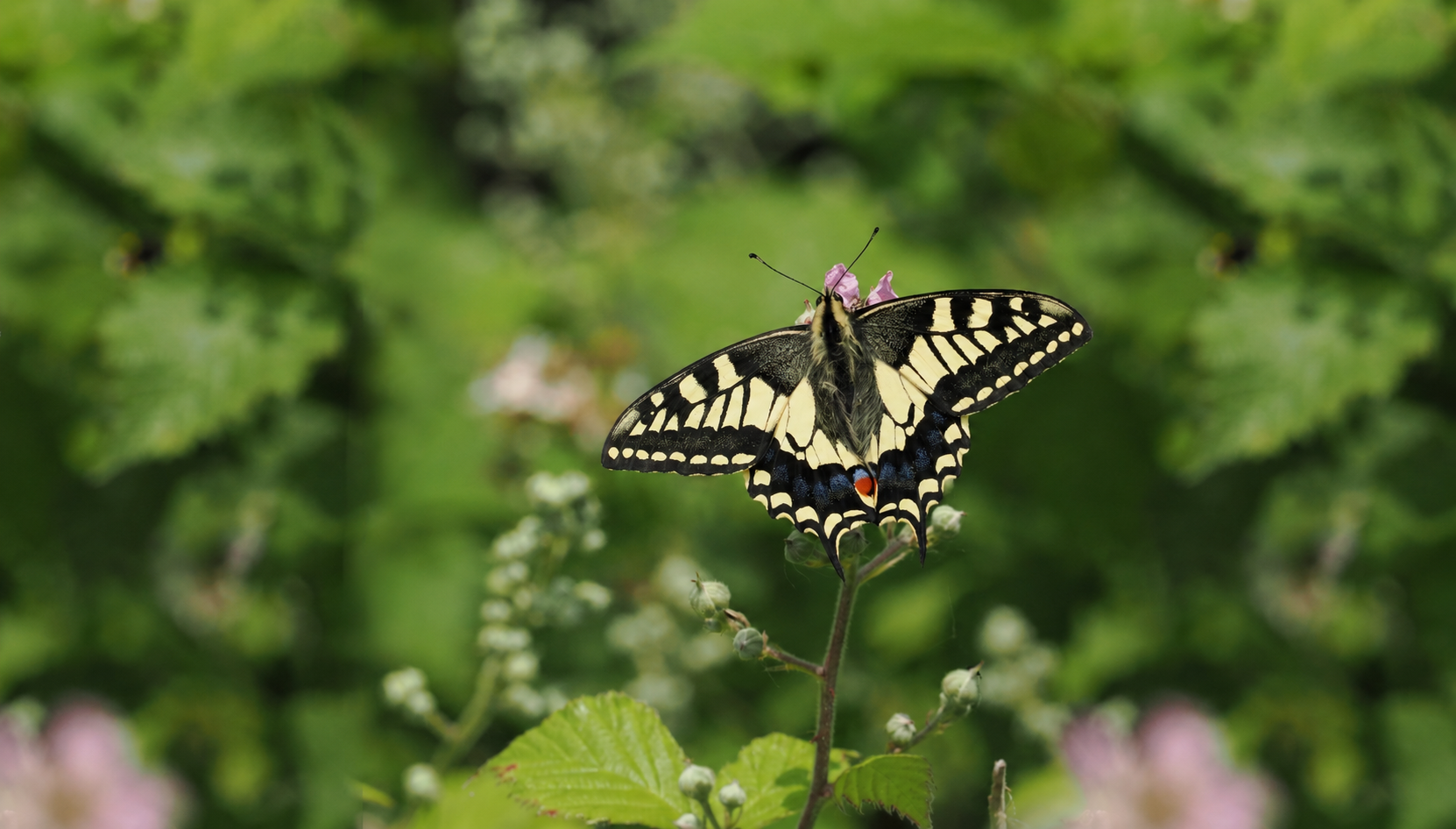
The Swallowtail & Birdwing Butterfly Trust, alongside Natural England and several other partners, has today 8th July 2026, launched a new project to bring Britain’s largest butterfly and its only native swallowtail species back from the brink of extinction.
The recently published work to carry out whole-genome sequencing of P. m. britannicus with our partners at Montpellier University, France showed that the British subspecies is genetically distinct and has maintained an isolated lineage for at least 200,000 years and so deserves to be conserved. http://doi.org/10.1111/icad.70102
Three year programme : The project will receive generous funding from Defra’s Species Recovery Programme, complemented by major in-kind support from the experts at the Swallowtail and Birdwing Butterfly Trust (SBBT). The team aims to define exactly what needs to be done to save this spectacular but vulnerable butterfly, restore its habitats and protect its equally rare foodplant, Milk-parsley.
The iconic British Swallowtail, with a wingspan that can exceed 9cm, was once widespread in freshwater wetlands across England, but is now restricted to the Norfolk Broads, where it faces extinction due to rising sea levels and saltwater intrusion into its last remaining strongholds. Climate change is driving these assaults from the sea, and the Swallowtail’s reedbed habitat and its Milk-parsley foodplant are unlikely to survive.
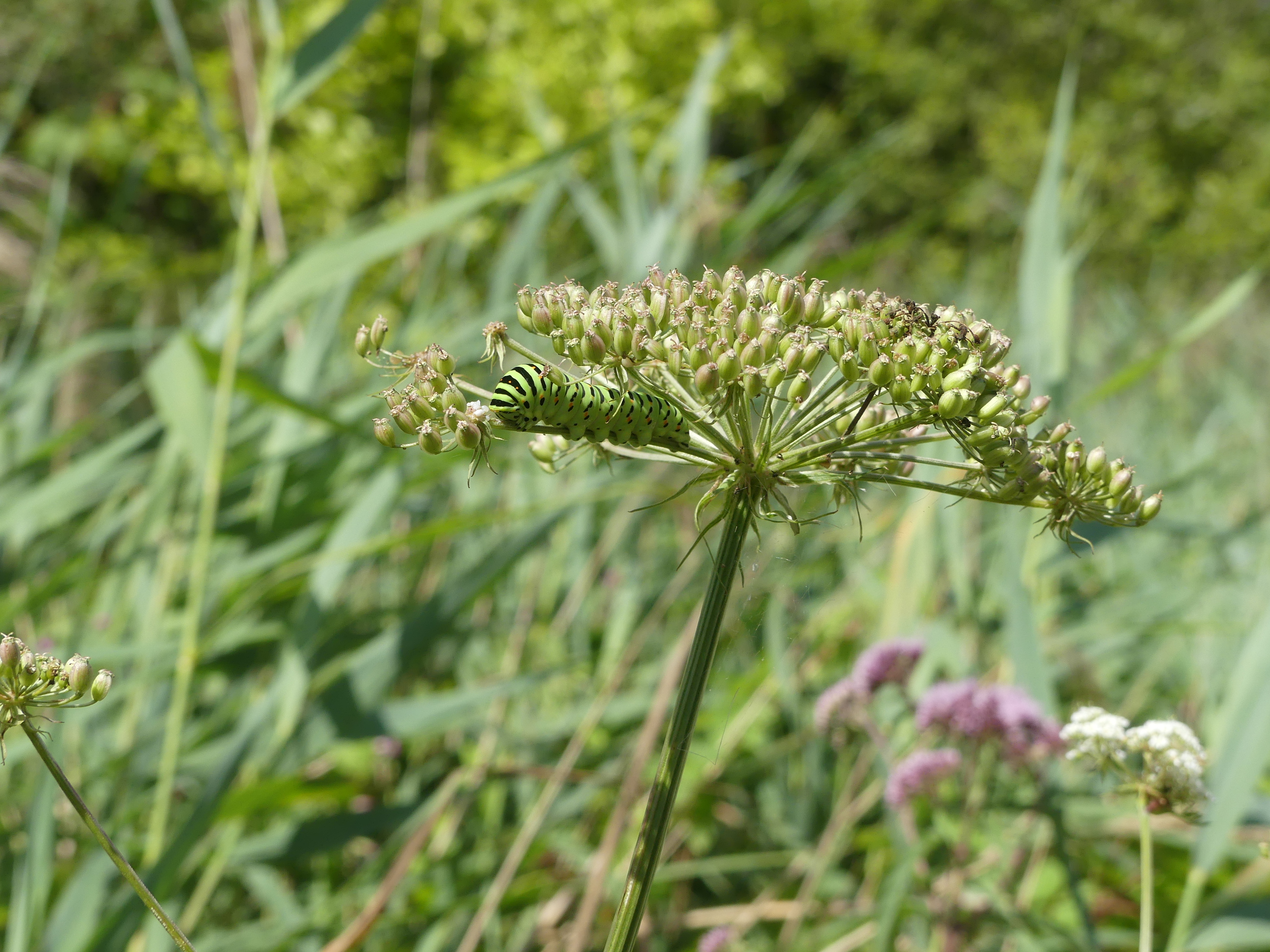
Milk-parsley under threat. Milk-parsley is already being killed by fungal pathogens that attack plants weakened by brackish water as well as over-grazing from the ever-increasing numbers of deer in the Broads.
Dr Mark Collins, President of the Swallowtail & Birdwing Butterfly Trust, said: “We must not lose this irreplaceable flagship of the fens. SBBT has campaigned to save it for more than five years, and this Defra funding will enable us to build the partnerships, scientific base and strategic approach needed to deliver a lasting solution to the devastating impact of climate change on this much-loved butterfly.”
Multidisciplined team.The project team from the Swallowtail & Birdwing Butterfly Trust, Natural England, the University of East Anglia and Oxford Brookes University, with support from other partners, will evaluate the severity and type of threats to the Swallowtail and Milk-parsley, assess what needs to be done, and initiate a practical programme of action.
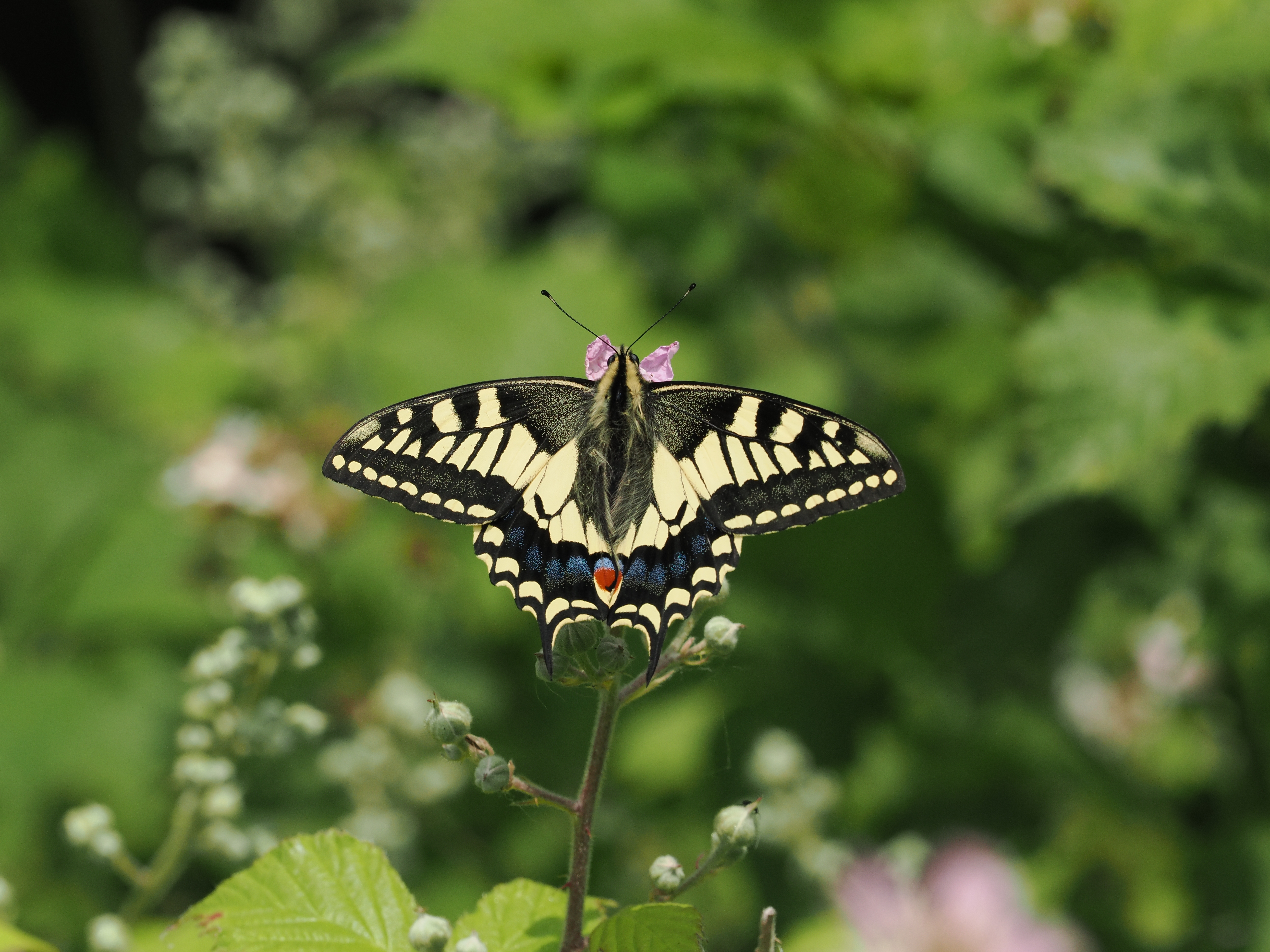
With support from academics and postgraduate students, the team will model potential sites for the restoration or creation of suitable Swallowtail habitat and assess the genetic health of the butterfly’s populations. The team will work with a range of local experts and conservationists to identify a network of sites across England where Swallowtails and Milk-parsley could thrive. This would allow the possibility of translocating these species so that they could gain a foothold in new areas.
Expressions of interest from possible partners in the project would be most welcome. If you are interested please get in touch using the email : contact@sbbt.org.uk
Natural England Species Recovery Senior Officer Phil Marks said:
“Natural England is helping to build the evidence base needed to safeguard the British Swallowtail and its Milk-parsley foodplant, informing a long-term conservation strategy for their recovery. This exciting partnership brings together leading experts, researchers and local partners, to create a shared vision for the future, marking an important step towards securing a brighter future for one of England’s most spectacular and treasured butterflies.”
The data and evidence gathered in this project will support the publication of a 25-year ‘Conservation Strategy and Action Plan for the British Swallowtail’.
Further details on the plight of the British Swallowtail can be found here.
The Species Recovery Programme is funded by the government and delivered by Natural England.
The programme funds species conservation projects including research into reasons for decline and methods of recovery, targeted habitat niche improvements, captive breeding and species reintroductions.
A full list of funded projects and species is available at https://www.gov.uk/government/publications/species-recovery-programme-projects-awarded-funding-for-2026-to-2029
For further information please contact us at contact@sbbt.org.uk


