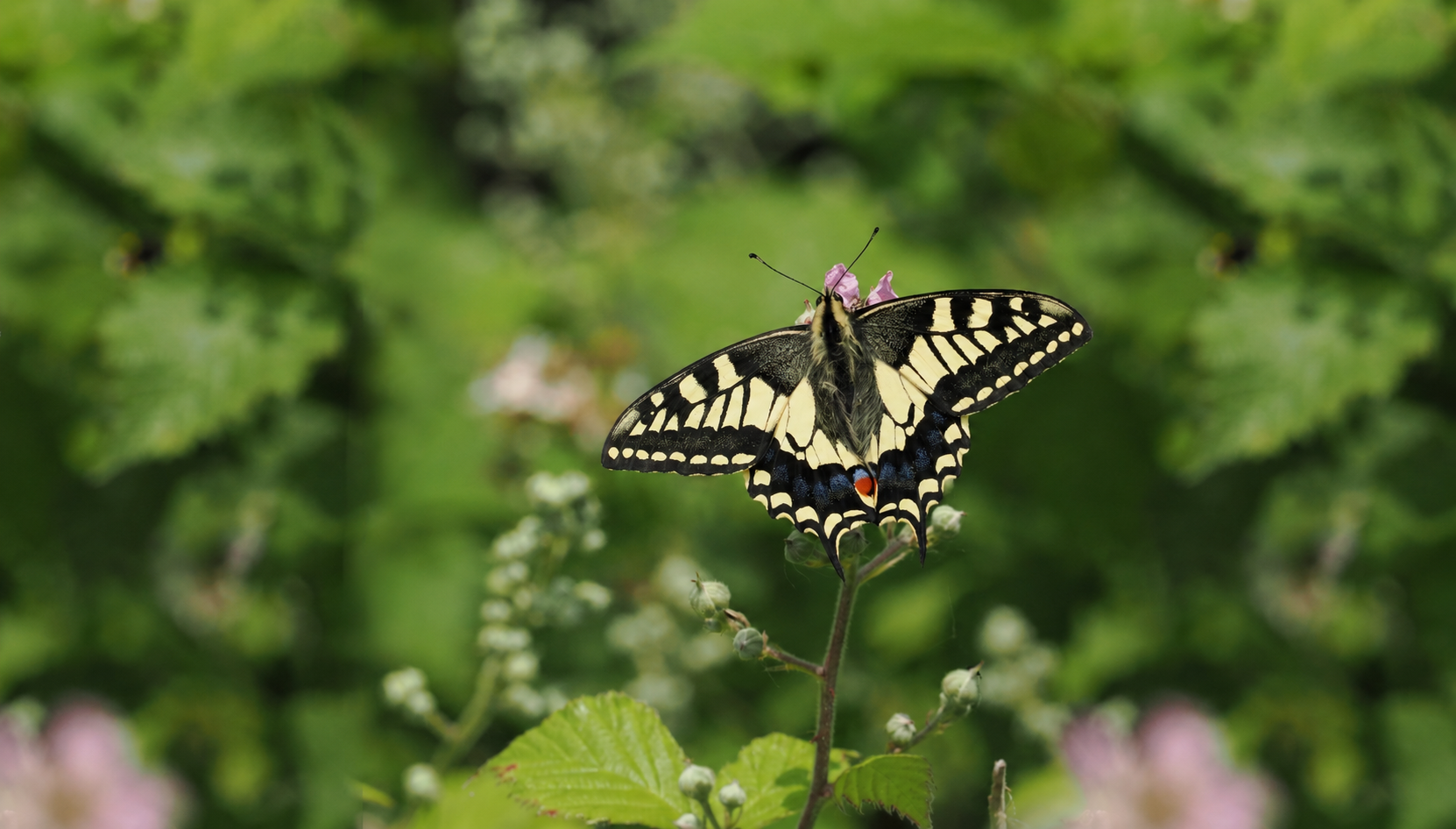
The Swallowtail and Birdwing Butterfly Trust (SBBT) challenges the conclusions of a recent review by Ingate (1) calling for radical new strategies in managing the British Swallowtail butterfly, Papilio machaon britannicus. The Trust first addressed this issue at a 2018 workshop, which identified sea-level rise and saltwater intrusion in the UK’s Norfolk Broads as the principal threats to the butterfly’s remaining reedbed habitat and to its larval foodplant, Milk-parsley (Peucedanum (Thysselinum) palustre) (2). A secondary risk was also noted, i.e. hybridisation with another subspecies, P. m. gorganus, which sometimes flies across from the European mainland to the UK’s south coast. The workshop recommended translocating the British Swallowtail to restored and more secure fenland sites, a plan now being developed in detail with support from Natural England.
Central to our rebuttal is a new genomic study by SBBT and its partners at Montpellier University, which shows that the British subspecies britannicus is genetically very distinct from continental subspecies, such as P. m. gorganus, with an estimated divergence time of 0.2–1.7 million years (3). Ingate assumed the opposite: that britannicus differs little from continental populations, and he used this assumption to justify a plan to introduce continental stock to the UK. Since that assumption has now been refuted, Ingate’s entire argument collapses. SBBT bolstered their point by citing a separate molecular study of European butterfly sister-species pairs (4), which found almost comparable divergence times among fully recognised species, suggesting that britannicus is unusually distinct as a subspecies, and possibly a relict of a once-wider European lineage.
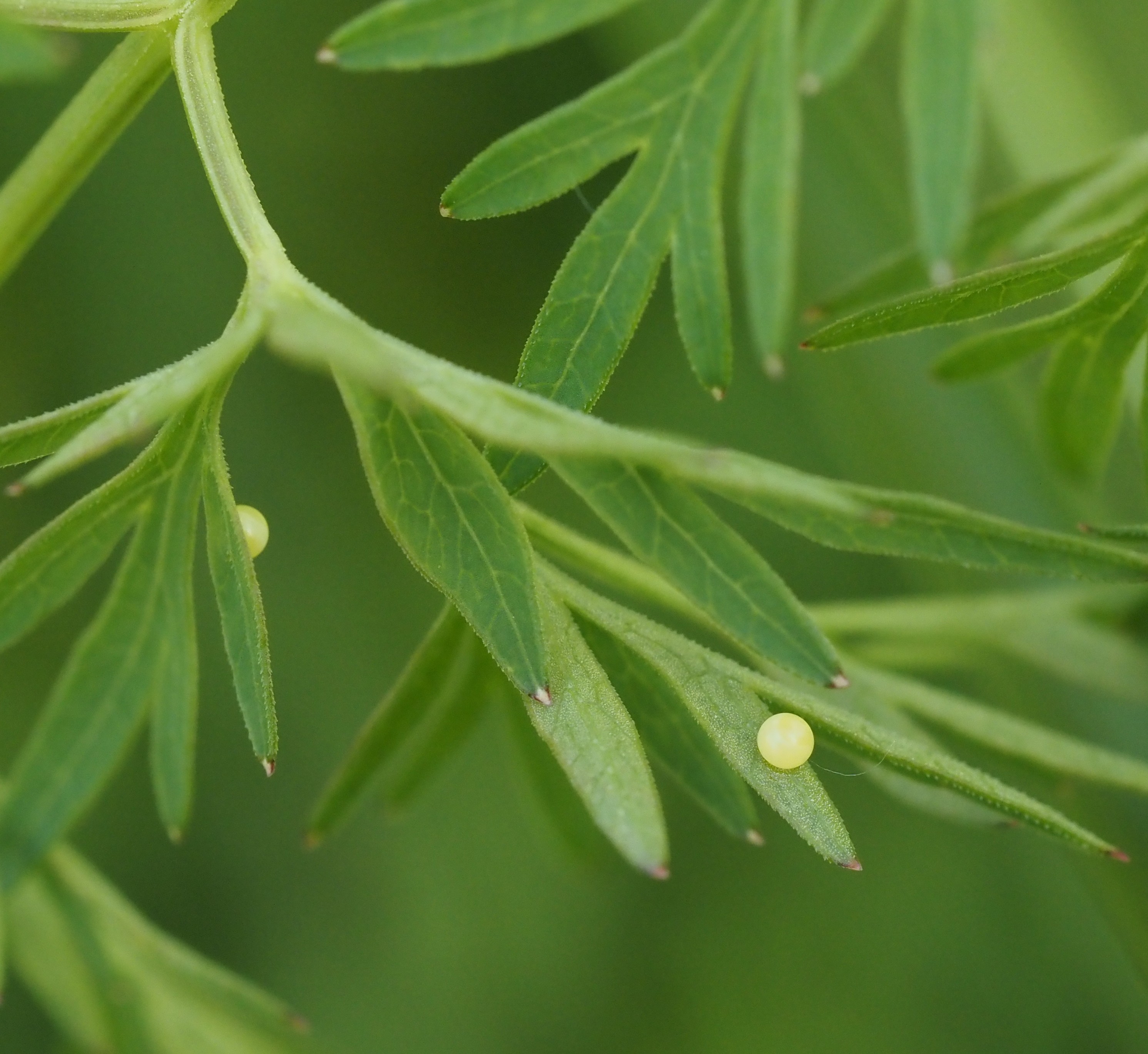
Swallowtail eggs : Photo Martin Partridge (SBBT)
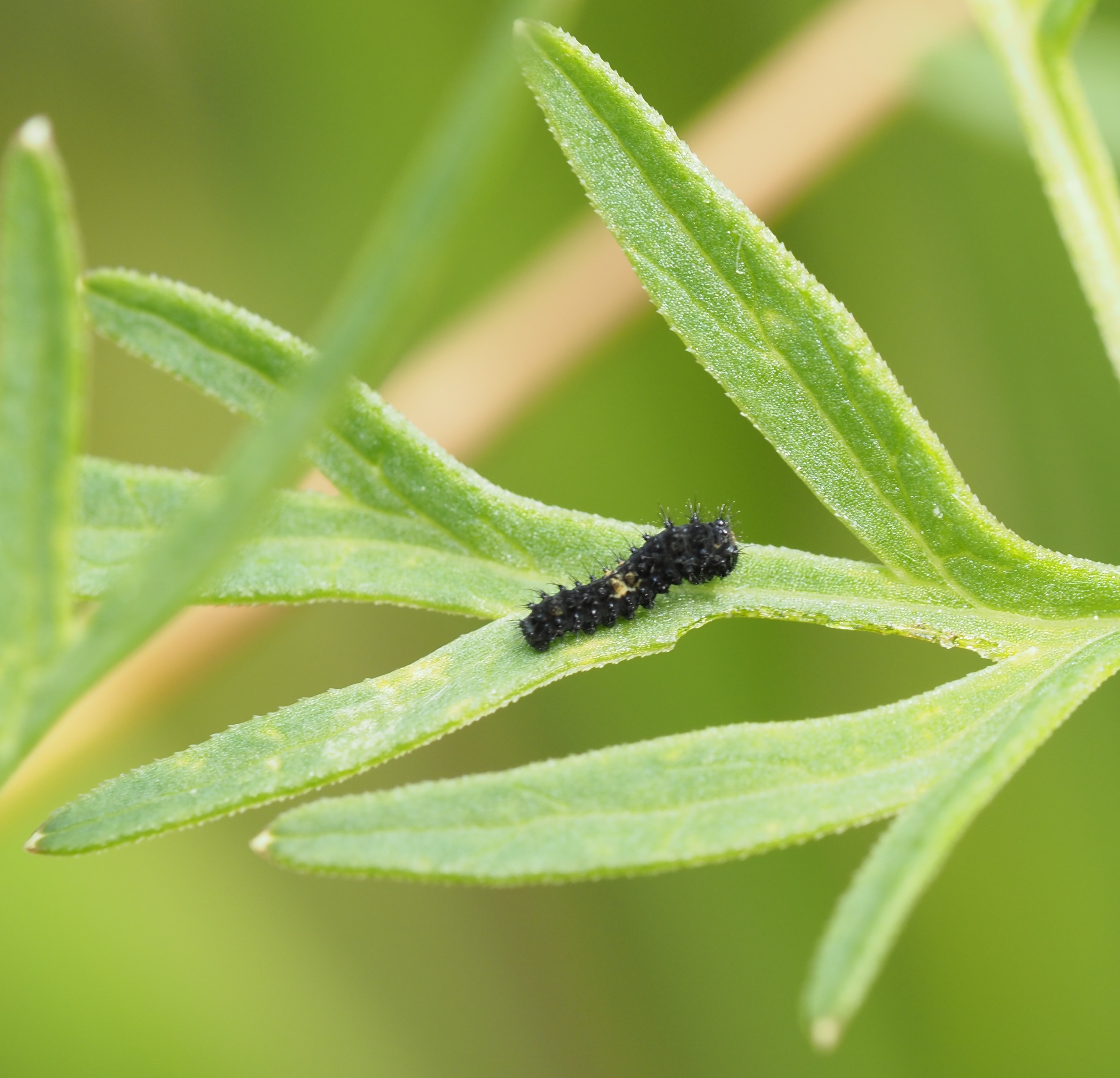
First Instar Swallowtail Caterpillar: Photo Martin Partridge (SBBT)
A second strand of the dispute concerns the British Swallowtail’s dependence on Milk-parsley. Ingate cited laboratory evidence, including older breeding work (5), showing that the species can develop on other plants, and argued that conservationists need not focus specifically on the association with Milk-parsley. SBBT counters that this conflates captive behaviour with wild behaviour, citing evidence of separate Swedish populations of P. m. machaon exhibiting “local monophagy,” each population specialising on a single host plant despite the physiological capacity to use several, even though no genetic basis for this pattern was found in that study (6). SBBT suggests that, given britannicus‘s newly demonstrated genetic distinctiveness, local genetic adaptation favouring Milk-parsley use is plausible in this case, unlike in the Swedish populations. They reinforce the argument with the historical example of Wicken Fen, where the butterfly went extinct as the site dried out rather than switching to nearby alternative host plants.
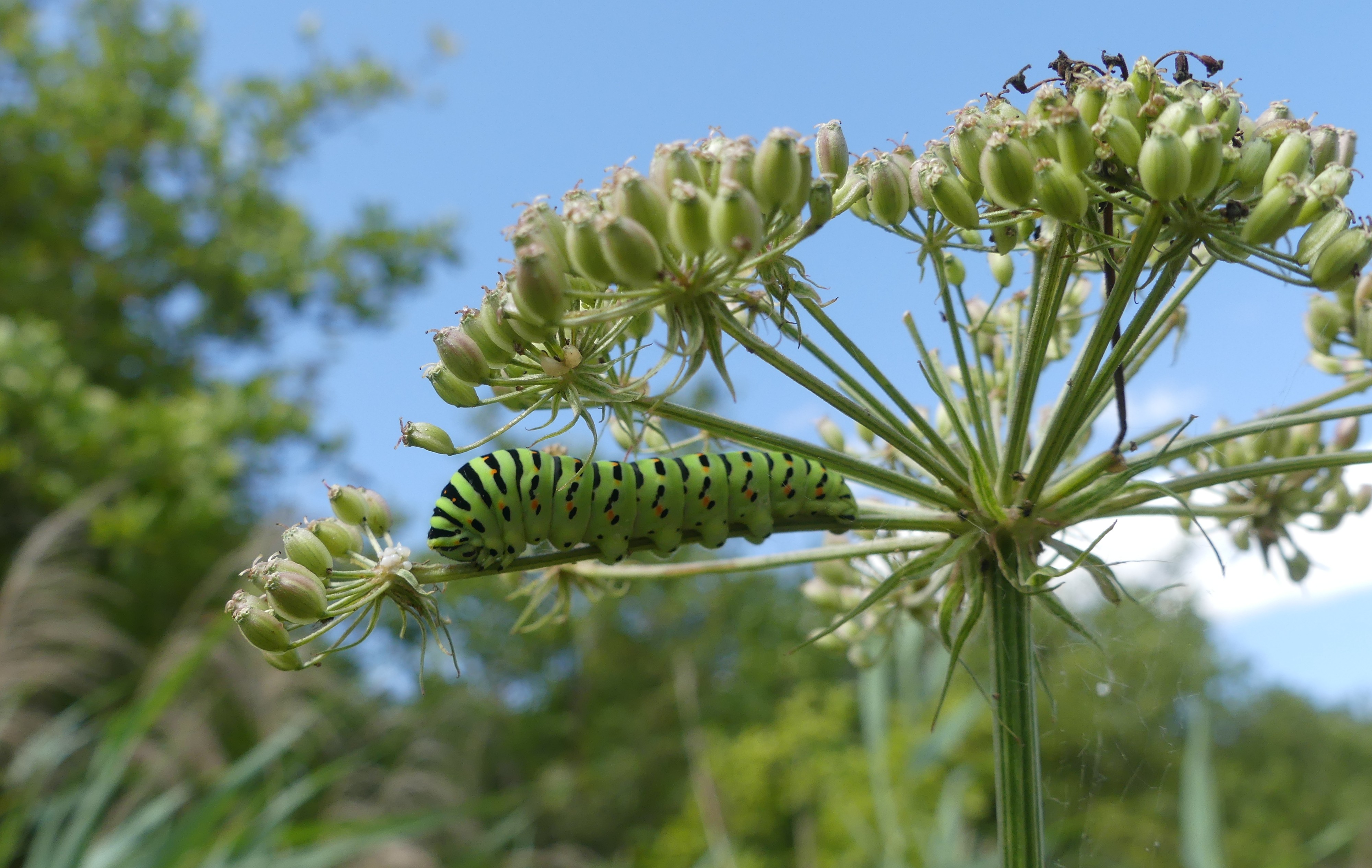
Fifth Instar Swallowtail Caterpillar on Milk-parsley : Photo Mark Collins (SBBT)
The third major contention concerns hybridisation. In contrast to SBBT’s belief that hybridisation with P. m. gorganus could threaten the British subspecies, Ingate proposed deliberately crossbreeding British and continental swallowtails, reasoning that hybrid females might be more likely to use alternative foodplants and thus spread the species into drier parts of the UK. SBBT objects to this on principle, invoking the broader literature on the risks of hybridisation in conservation (7,8) alongside arguments for its potential benefits (9), and calls for caution (10). They note that while some evolutionary biologists (11) have argued that hybridisation can be justified for threatened species facing climate pressure, that argument does not apply here: nominal P. machaon as a whole, including the continental gorganus subspecies, is not threatened, whereas it is subspecies britannicus, classified as Vulnerable, that the Trust is trying to protect. Deliberately diluting that population’s distinct genetic identity to “save” (or spread) the wider nominal species, the Trust argues, is a perverse proposal that misunderstands what is actually at risk.
This leads into the paper’s broader conceptual disagreement, i.e. whether conservation should target nominal species or the wider ecosystems of which they are a part. Ingate’s apparent goal is to see P. machaon established more widely across Britain because this would be popular with the public. SBBT, by contrast, frames britannicus as a flagship for an entire fenland food web and ecosystem, noting its complex and unique ecological relationships, including with the dependent parasitoid wasp Trogus lapidator (12,13) as well as Milk-parsley, and argues that effective conservation must address this endangered wetland ecosystem as a whole rather than treat the butterfly as an isolated unit to be propagated wherever it might survive.
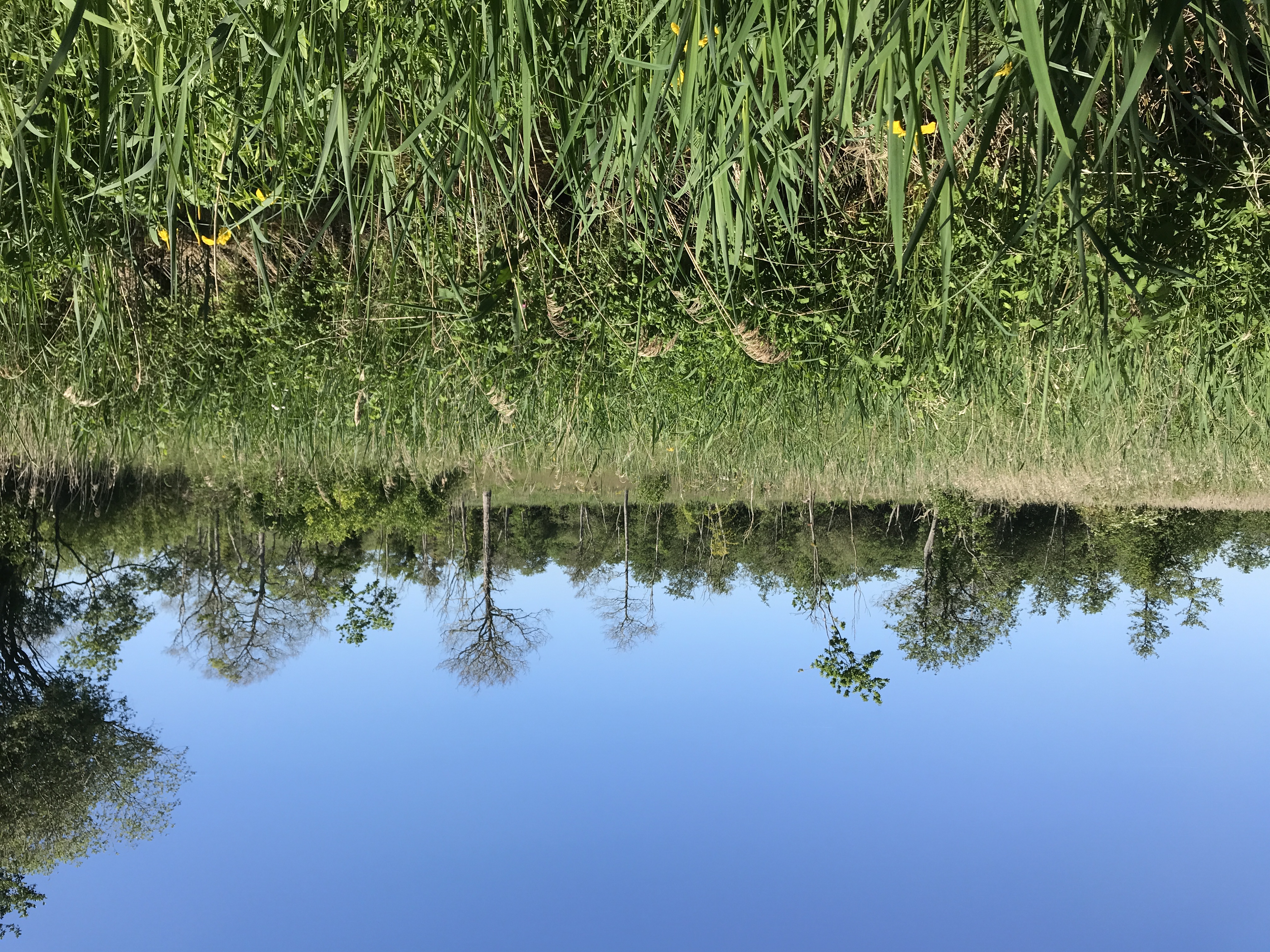

On a broader cultural note, SBBT cites a passage from a 1954 memoir describing an unforgettable encounter with the British Swallowtail at Wicken Fen (14), where it has since gone extinct, to argue that public engagement with distinctive wildlife more effectively supports conservation than simply maximising a species’ geographic range. The Trust concludes that Ingate’s proposals are ill-informed and misguided, expressing the hope that Natural England and other UK conservation bodies will disregard his recommendations, while reaffirming the ongoing translocation and habitat-restoration programme as the more culturally appropriate and scientifically grounded path forward.
In essence, SBBT’s rebuttal rests on a) new genomic evidence that undermines the genetic-similarity premise on which Ingate’s proposal is based; b) field and historical evidence showing that britannicus is more host-specific than laboratory tests might imply; and c) the assertion that conservation priorities should centre on preserving a genetically distinct, ecologically embedded population and its habitat rather than promoting the nominal species’ geographic spread through hybridisation. A full account of these arguments is in preparation for submission to an academic journal.
References
- Ingate ST (2026) The future of the Swallowtail butterfly (Papilio machaon) in the United Kingdom: a review and call for new conservation strategies. Journal of Insect Conservation 30(3):46.
- Collins NM et al. (2020) Ecology and conservation of the British swallowtail butterfly, Papilio machaon britannicus: old questions, new challenges and potential opportunities. Insect Conservation and Diversity 13(1):1–9. https://doi.org/10.1111/icad.12371
- Nabholz G et al. (2026). Endemic but not eroded: genomic distinctiveness and conservation genomics of the British swallowtail butterfly (Papilio machaon britannicus Seitz, 1907). Insect Conservation and Diversity:15 pp. Accessible at: https://doi.org/10.1111/icad.70102
- Ebdon S et al. (2021) The Pleistocene species pump past its prime: evidence from European butterfly sister species. Molecular Ecology 30(14):3575–3589.
- Gardiner BOC (1963) Notes on the breeding and biology of Papilio machaon L. (Lepidoptera: Papilionidae). Proceedings of the Royal Entomological Society of London (A) 38(10–12):206–211.
- Wiklund C et al. (2018) Local monophagy and between-site diversity in host use in the European swallowtail butterfly, Papilio machaon. Biological Journal of the Linnean Society 123(1):179–190.
- Rhymer JM, Simberloff D (1996) Extinction by hybridization and introgression. Annual Review of Ecology and Systematics 27:83–109.
- Allendorf FW et al. (2001) The problems with hybrids: setting conservation guidelines. Trends in Ecology & Evolution 16(11):613–622.
- Zecherle LJ, et al. (2021) Subspecies hybridization as a potential conservation tool in species reintroductions. Evolutionary Applications 14(5):1216–1224.
- Gompert Z, Buerkle CA (2016) What, if anything, are hybrids: enduring truths and challenges associated with population structure and gene flow. Evolutionary Applications 9(7):909–923.
- Parmesan C et al. (2023) The case for prioritizing ecology/behavior and hybridization over genomics/taxonomy and species’ integrity in conservation under climate change. Biological Conservation 281:109967.
- Nobes G (2008) Investigation of the status of Trogus lapidator (F.) (Hym.: Ichneumonidae) in Britain, a parasitoid of Papilio machaon L.(Lep.: Papilionidae). Entomologist’s Record and Journal of Variation 120(3):125–128.
- Shaw MR et al. (2009) Parasitoids of European butterflies. In: Settele J, Shreeve T, Konvička M, Van Dyck H (eds) Ecology of Butterflies in Europe. Cambridge University Press, Cambridge, UK, pp 130–156.
- Moore J (1954) The Season of the Year. Collins, London, UK.


