SBBT

Saving swallowtail and birdwing butterflies

Donate

  • Bluesky
  • E-mail
  • Facebook
  • Instagram
  • Twitter
  • YouTube
  • Home
  • Latest News & Blogs
    • News
    • Blog
  • About Us
    • In Brief
    • People
      • Patron, President & Board Of Trustees
      • Honorary Advisors & Coordinators
    • Frequently Asked Questions
    • Opportunities
      • Position vacant: Hon. Secretary
      • Position Vacant: Trustee
    • Small Print
      • Constitution of the Swallowtail and Birdwing Butterfly Trust
      • Charity Registration
      • Privacy Policy
      • Annual Reports & Financials
  • Our Projects
    • Conservation
      • Conservation of the Swallowtail in Britain
        • Wheatfen Meeting Agenda and Speakers 27 June 2018
        • Meeting Report: Conservation of the Swallowtail in Britain
        • Swallowtail MSC Studentships
        • Report in the Guardian
      • Queen Alexandra’s Birdwing Project
      • The Bhutan Glories and Shoskom – the Bhutan Glories’ Hill
      • Swallowtail Survey on Fiji Identifies New Species
        • SBBT’s Further Studies on the Natewa Swallowtail
      • Swallowtail Survey on Dominica
      • Homerus Swallowtail DNA Study
      • Kinabalu or Borneo Birdwing
        • Kinabalu Birdwing Project Update 2023
        • Kinabalu Birdwing Project
      • Richmond Birdwing
    • Research Needs
    • On-line Conferences
      • “Saving Swallowtails: the Apollos and their Allies” 2024
      • “Saving Swallowtails” 2021
        • “SAVING SWALLOWTAILS” CONFERENCE WORLD SWALLOWTAIL DAY 2021 REPORT
    • World Swallowtail Day
      • 2024 World Swallowtail Day – 9th June
      • 2023 World Swallowtail Day – 11th June
      • Saving Swallowtails – 12 June 2021
      • 2020 World Swallowtail Day – 14th June
        • SBBT Photography Competition Winners
        • Swallowtail Limerick Day
        • Colouring Book
      • 2019 World Swallowtail Day – REPORT
  • About Swallowtails
    • Swallowtails of the World
      • Papilionidae – Global List (Test)
      • Swallowtails of the World – Take the Tour
      • Subfamily Baroniinae
      • Subfamily Papilioninae
      • Subfamily Parnassiinae
      • References
      • Featured Species
        • Macleay’s Swallowtail
        • Richmond Birdwing
        • Small Réunion Swallowtail: Papilio phorbanta
    • Biology
    • Distribution & Classification
    • Swallowtails & Humankind
    • Swallowtails & Science
    • Threats To Swallowtails
      • Top Ten Threatened Species
        • Graphium levassori
        • Graphium sandawanum
        • Ceylon Rose: Atrophaneura jophon
        • Southern Tailed Birdwing: Ornithoptera meridionalis
        • Queen Alexandra’s Birdwing
        • Wallace’s Golden Birdwing: Ornithoptera croesus
        • Homer’s or Homerus Swallowtail: Papilio homerus
        • Papilio moerneri
        • Papilio aristophontes
        • Luzon Peacock Swallowtail: Papilio chikae
    • Captive Breeding & Release Of Butterflies
    • Key References
  • Publications
    • Papilio! Newsletters
    • Global Priorities
    • Action Plan
  • Artwork
  • Merchandise
  • Contact Us
  • World Swallowtail Day – 8th June 2025
SBBT » Latest News and Blog » Blog » The Quest for Queen Alexandra’s Birdwing

The Quest for Queen Alexandra’s Birdwing

15th February 2026 by SBBT

Artist, naturalist and vet, John Gale, shares his account of his adventures to Papua New Guinea in search of the magnificent Queen Alexandra’s Birdwing butterfly, the inspiration behind his beautiful Ornithoptera alexandrae print.

Three years ago I met up with Charles Dewhurst, SBBT’s first Secretary, who arranged for me to visit Papua New Guinea (PNG) with the plan to see Queen Alexandra’s Birdwing butterfly, Ornithoptera alexandrae (QABB) in the wild but also and more importantly, to produce some artwork of this extraordinary butterfly. Here I account the events that enabled me to achieve these lifetime dreams.
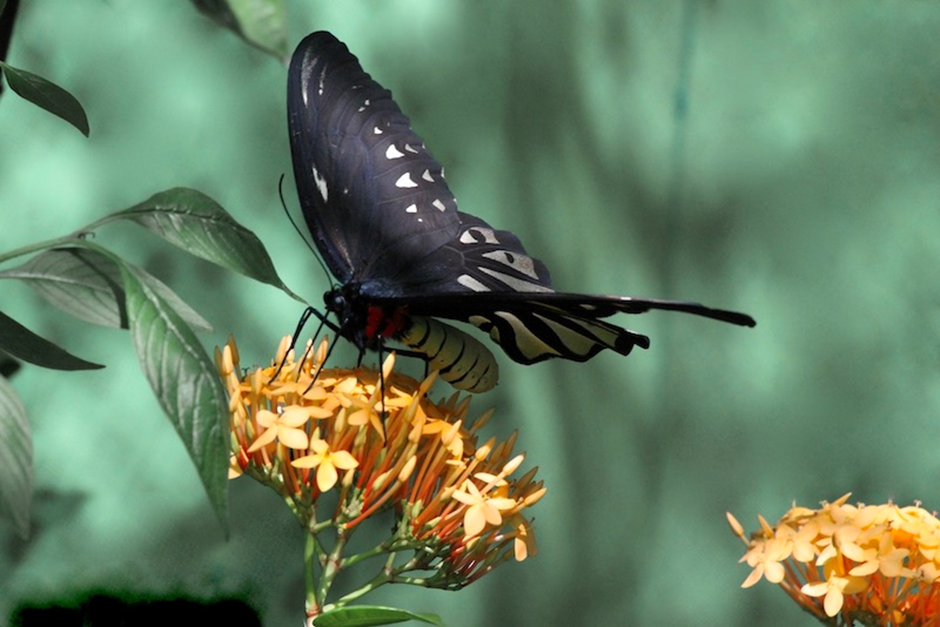
Female Queen Alexandra’s Birdwing Butterfly – Ornithoptera alexandrae. John Gale ©

January 2023 saw me making a speedy recovery from my second hip replacement and I was emailing Charles on a regular basis. To my amazement he managed to arrange for me to visit the Popondetta region of PNG later in the year to spend time researching and visiting lowland rainforest forest to look for QABB.

So, I planned a three week trip to PNG for June that year; I would spend two weeks in the Highlands, Mount Hagen region collecting art material for Birds of Paradise paintings and then a week in Popondetta looking for QABB. I sent my brother Neil, who runs ‘The Magic of Life Butterfly House’ in Wales a message saying I had brought a flight to Popondetta – that meant one thing, I was on the Quest for Queen Alexandra’s Birdwing Butterfly.

There are two populations of QABB which is only found in Oro Province, PNG. There is a lowland population around the Popondetta plain and the other on the Managalase Plateau at 800m in elevation, which is south of Popondetta. Both these areas are only about 50km square, this is a very localised butterfly indeed!

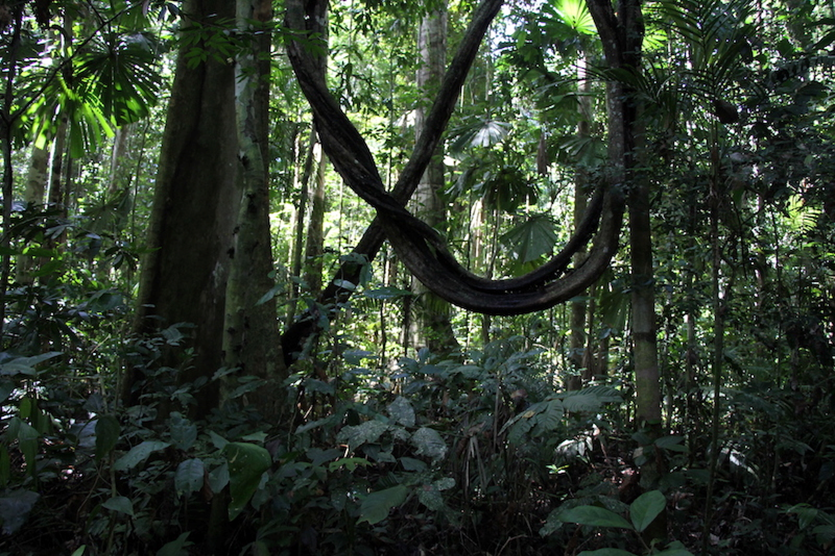
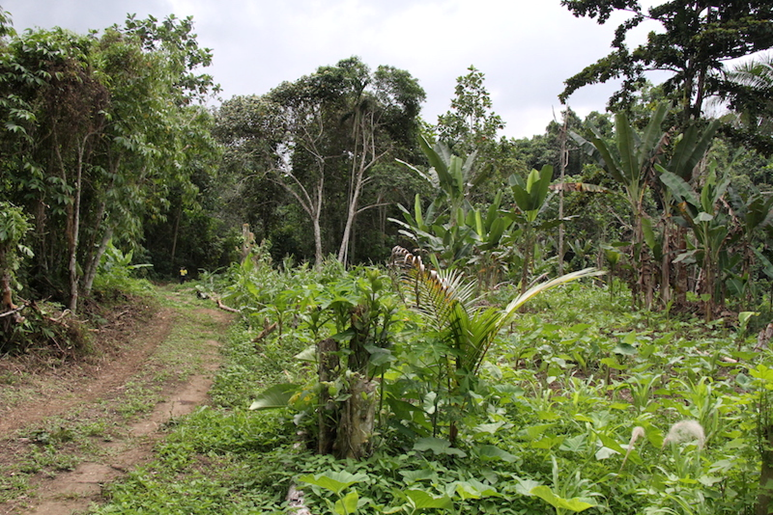
The forest I visited was west of Popondetta. I was welcomed to a small village of only a few houses which was accessed along palm oil and forest tracks, crossing rivers and travelling past remote settlements. Surrounding the village were small fields of crops, then beyond that was the forest. Clearings in the forest had a variety of flowering shrubs, specifically planted to attract butterflies.
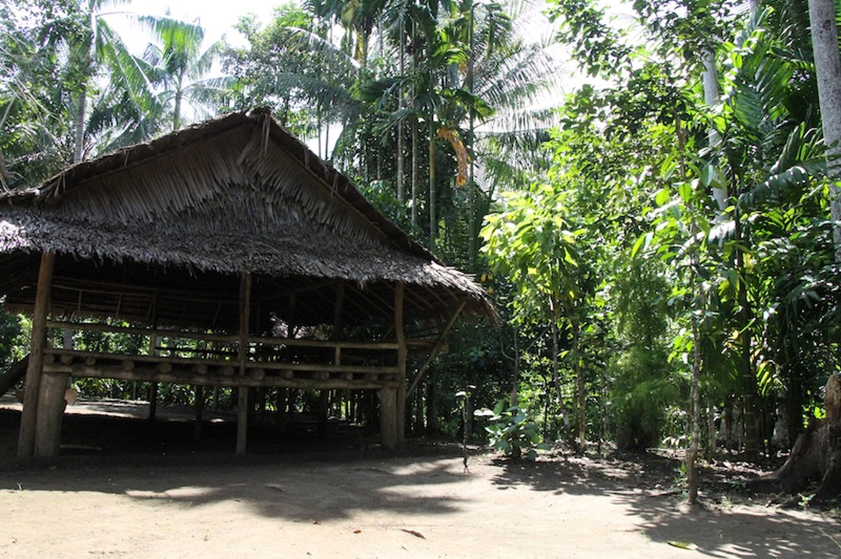
The remote village I visited, accessed along rough tracts through oil palm and forest. John Gale ©
Around the village, small fields growing sweet potato and bananas. John Gale ©
Primary lowland rainforest, the home of Queen Alexandra’s Birdwing Butterfly. John Gale ©

Seeing QABB in the wild is difficult, I visited the forest daily for 5 days and failed to see it. I had heard that a Japanese film crew had spent 3 weeks in the same forest 18 months previously and only seen QABB on two occasions. Birdwing butterflies are generally active from 6.30am to about 11am, and then again from 4pm onwards, the rest of the time they are not very active and roost.  A couple of times the locals called out QABB as one drifted high across the canopy, a frantic rush to the spot but they were gone.
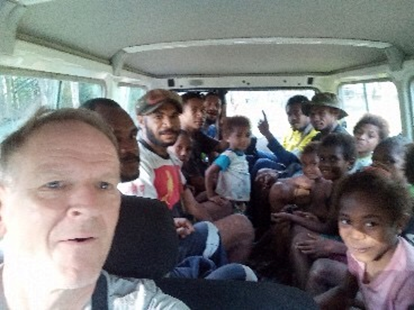
Off course when visiting the forest the whole village comes along. John Gale ©
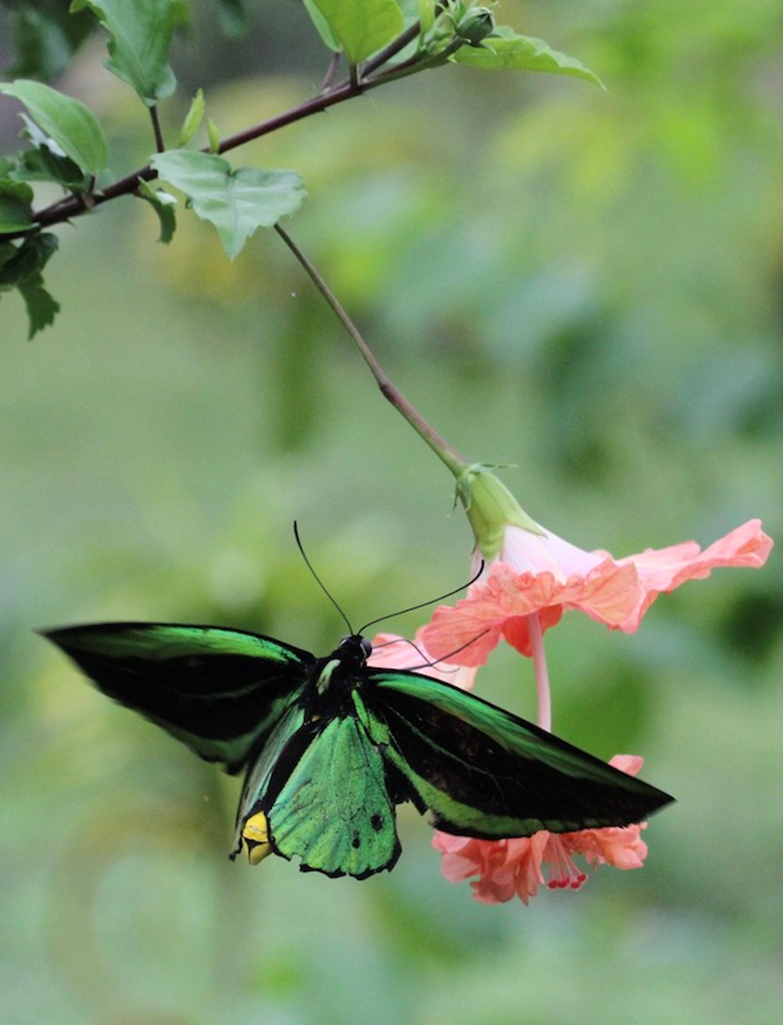
Priam’s Birdwing or Common Green Birdwing, Ornithoptera priamus, was seen frequently while looking for QABB. John Gale ©

On my last day, Darren Bito, who was looking after me in Popondetta, gathered my group, said a prayer for us to find QABB and then we headed back into the forest for the last time. Sitting in the forest, the same feeling I had had for the last few visits of ‘this isn’t going to happen’ starting to overwhelm me, when suddenly there was a huge Birdwing flying across a large gap in the canopy. I immediate got my binoculars onto her and saw the diagnostic ‘art decor’ pattern of the hind wing and screamed out QABB. Rocko, who had accompanied me on every visit to the forest shouted out QABB at the same time. There she was, a female Queen Alexandra’s Birdwing in the wild in a forest on the Popondetta Plain in Oro Province, PNG, the largest and one of the rarest butterflies in the world, a childhood dream come true at 10.40am on the 22nd June 2023!
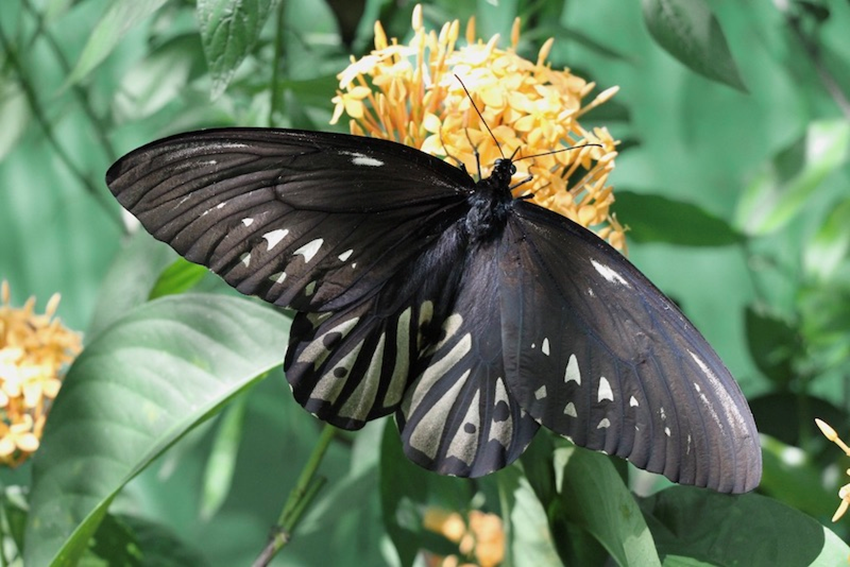
Female Queen Alexandra’s Birdwing – Ornithoptera alexandrae.           John Gale ©

I had been in contact with Charles every other day or so, reporting progress and finally I could say I had found QABB, but boy it had been hard work and I couldn’t have cut it any finer in managing to see this extraordinary butterfly. After my goodbyes and tremendous thanks to everybody who had looked after me in Popondetta I returned to Port Moresby planning a couple of days in Varirata NP before going home, there was still one unexpected adventure to come while in PNG!
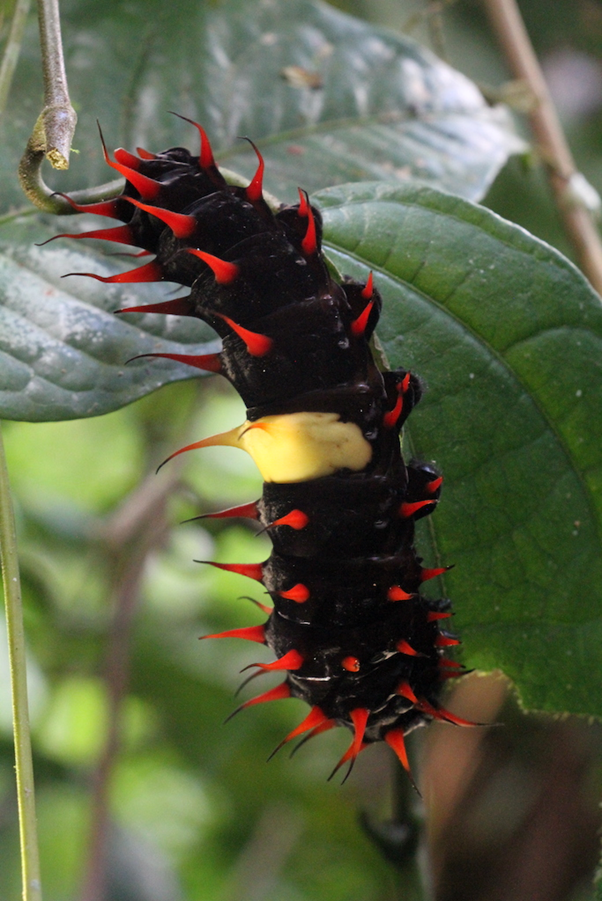
Final instar larva of Queen Alexandra’s Birdwing – Ornithoptera alexandrae, feeding on Arisotlochia dielsiana. John Gale ©

I met up with friends in Moresby to take me to Varirata NP for a couple of days to see Raggiana Bird of Paradise. I was still pinching myself that I had seen QABB and enjoyed sketching and photographing Raggiana Bird of Paradise all part of planning an oil painting. We saw some other fabulous birds and what a great way to end an amazing three weeks in PNG.

The next day I visited Varirata again and the beautiful view point with the stunning backdrop looking south towards the lowlands and Moresby in the distance. It was very early in the morning and we were the first people at the view point.

Suddenly, there were four masked men walking very fast towards us. The smaller man had a gun and the others large bush knives. My goodness – bandits. I immediately took my camera card out of my camera and put it in my back pocket. They were on us very quickly, with a gun in my face and bush knives threateningly being lunged at each of us they took all our cameras, optics and back packs, they ransacked the car and even took my packed lunch, and then they fled into the forest.

We left the park and I returned to my hotel in Moresby. I had to get ready to go to the airport for an evening flight back to the UK. I didn’t feel very stressed by what had just happened, I filled out a police report and sent a message home to my family saying guess what just happened!

I look back at my trip in June 2023 and put it down as probably the most amazing trip I have ever undertaken. I met so many remarkable people, who offered their hospitality and kindness, shared their food and showed me their incredibly beautiful country. In no way do I hold any resentment to the young men who robbed me, I hope they can find a way to move themselves forward and peace.
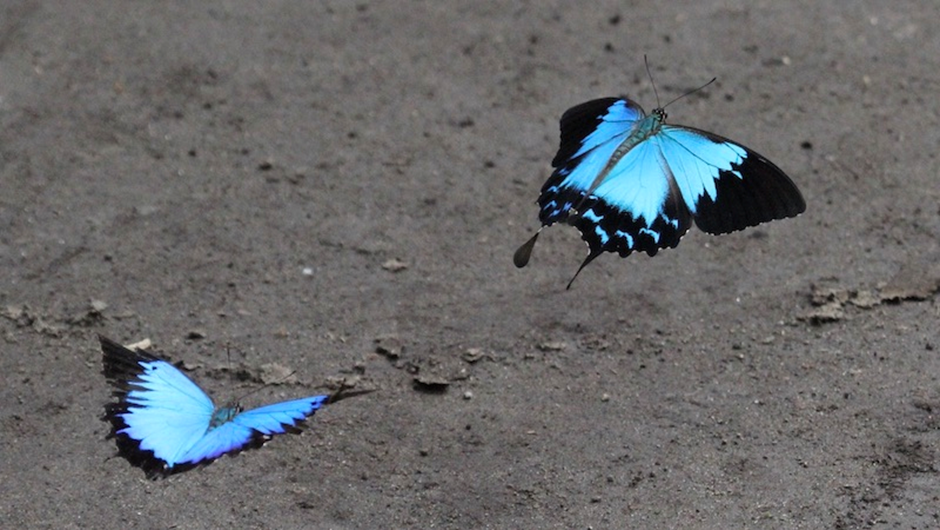
Papilio ulysses, was regularly encountered in Oro Province. John Gale ©

Over the following months I focused on QABB artwork from my trip, showing males and females, as well as the food plant Artistolochia dielsiana. I want my artwork to show butterflies active and alive, keeping well away from images of set specimens. I’m still working on QABB paintings in my studio from my 2023 trip and will present these as they are finished.
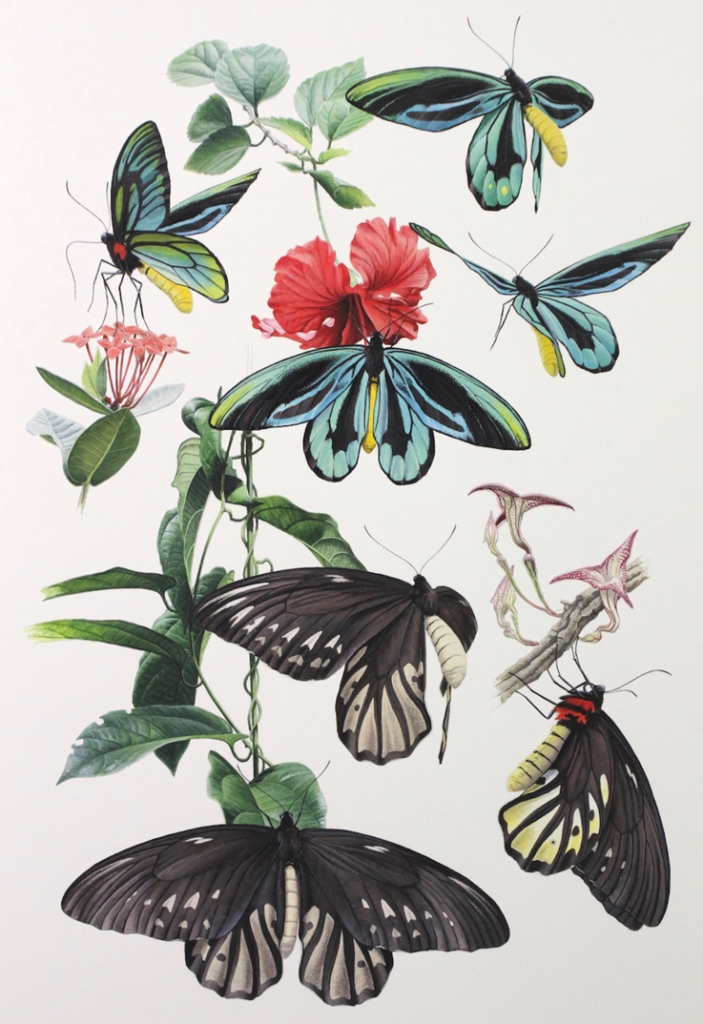
Illustration plate showing male and female Queen Alexandra’s Birdwing painted at life size. John Gale ©

So there we are, that’s my story of QABB during June 2023.

There is however, just one little detail missing, I haven’t seen a male….!

In early March 2025, I learnt with great sadness that Charles had died. I count myself very lucky that I had got to know Charles over the last two or so years. We kept in regular contact, talking about QABB, New Guinea, wildlife art, butterflies and paintings, and he set me up to achieve a childhood dream to see Queen Alexandra’s Birdwing Butterfly in the wild and I thank him immensely for that wonderful gift.

John Gale, September 2025.
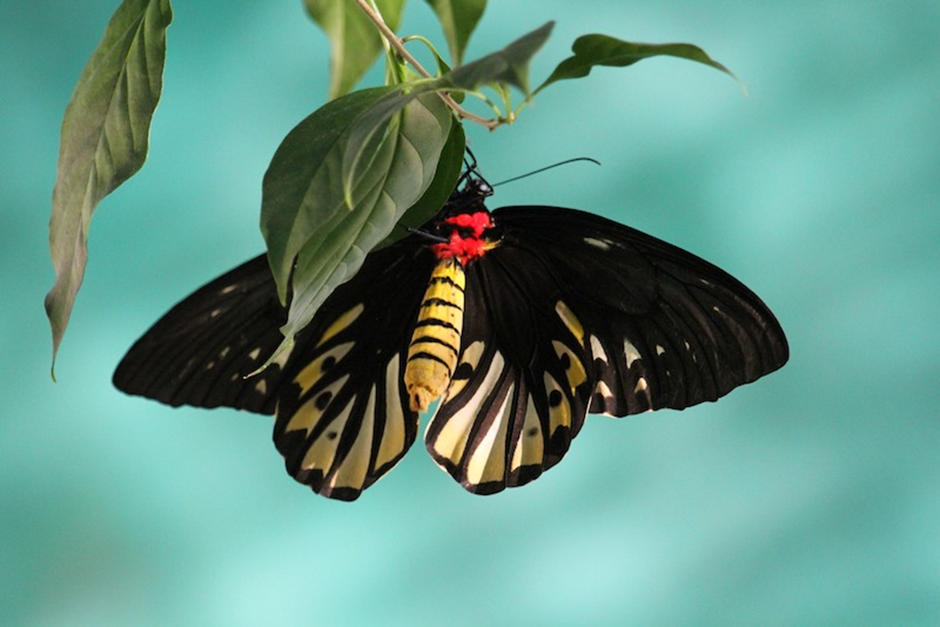
Under wing view of Queen Alexandra’s Birdwing – Ornithoptera Alexandrae.  John Gale ©

Filed Under: Blog Tagged With: birdwing, butterflies, Queen Alexandra's Birdwing

Newsletter


    We want to keep you up to date!
    Sign up to hear from us and we’ll send you our free e-newsletter and keep you up to date with what’s happening at the Swallowtail & Birdwing Butterfly Trust, including news, campaigns and appeals. Don't worry, we take care of your data and never release it to third parties. See our Privacy Policy for details

    Latest News

    On thin ice: Cryopreservation attempts to conserve the British Swallowtail

    15th February 2026

    The Quest for Queen Alexandra’s Birdwing

    15th February 2026

    Jamaican Swallowtails under threat

    4th February 2026

    The Butterfly Effect – When Butterflies Go Extinct

    21st January 2026

    Apollo Butterflies of Nepal

    12th December 2025

    Useful Links

    • Contact Us
    • Donate
    • Latest News and Blog

    Supporters & Collaborators

    Our Mission

    The mission of the Swallowtail and Birdwing Butterfly Trust is to conserve and protect members of the Papilionidae, a worldwide family of more than 580 species that include the largest, most spectacular and most endangered butterflies on the planet.
     

    Aims

    SBBT aims to build the capacity of local people and organisations to achieve long-lasting conservation and sustainable change.

    Methods

    We achieve this in four ways: we raise financial resources; convene research networks and partnerships; catalyse action, and provide scientific and technical support to conservation projects.

    Wider Reach

    Our work is generally planned and executed in the context of wider butterfly faunas, their foodplants, and the ecosystems that they inhabit.

    Giving

    Financial contributions are welcome and will be treasured. We also need your ideas, new information, suggestions and encouragement!

    Donate Today

    What We Do

    We do four things to help swallowtails and birdwings: we raise financial resources; convene networks and partnerships; catalyse action, and provide scientific and technical support.

    Contact Us

    Send an email to info@sbbt.org.uk, or post a letter to SBBT, c/o Stephenson Smart, Queens Head House, The Street, Acle, Norwich NR13 3DY, UK

    Connect

    • Bluesky
    • E-mail
    • Facebook
    • Instagram
    • Twitter
    • YouTube

    Useful Links

    • Home
    • About Swallowtails
    • About us
    • Our projects
    • Publications
    • Donate
    • Contact us

    Papilio! Newsletter


      We want to keep you up to date!
      Sign up to hear from us and we’ll send you our free e-newsletter and keep you up to date with what’s happening at the Swallowtail & Birdwing Butterfly Trust, including news, campaigns and appeals. Don't worry, we take care of your data and never release it to third parties. See our Privacy Policy for details

      © Copyright SBBT 2026 All Rights Reserved · Registered Charity 1174142