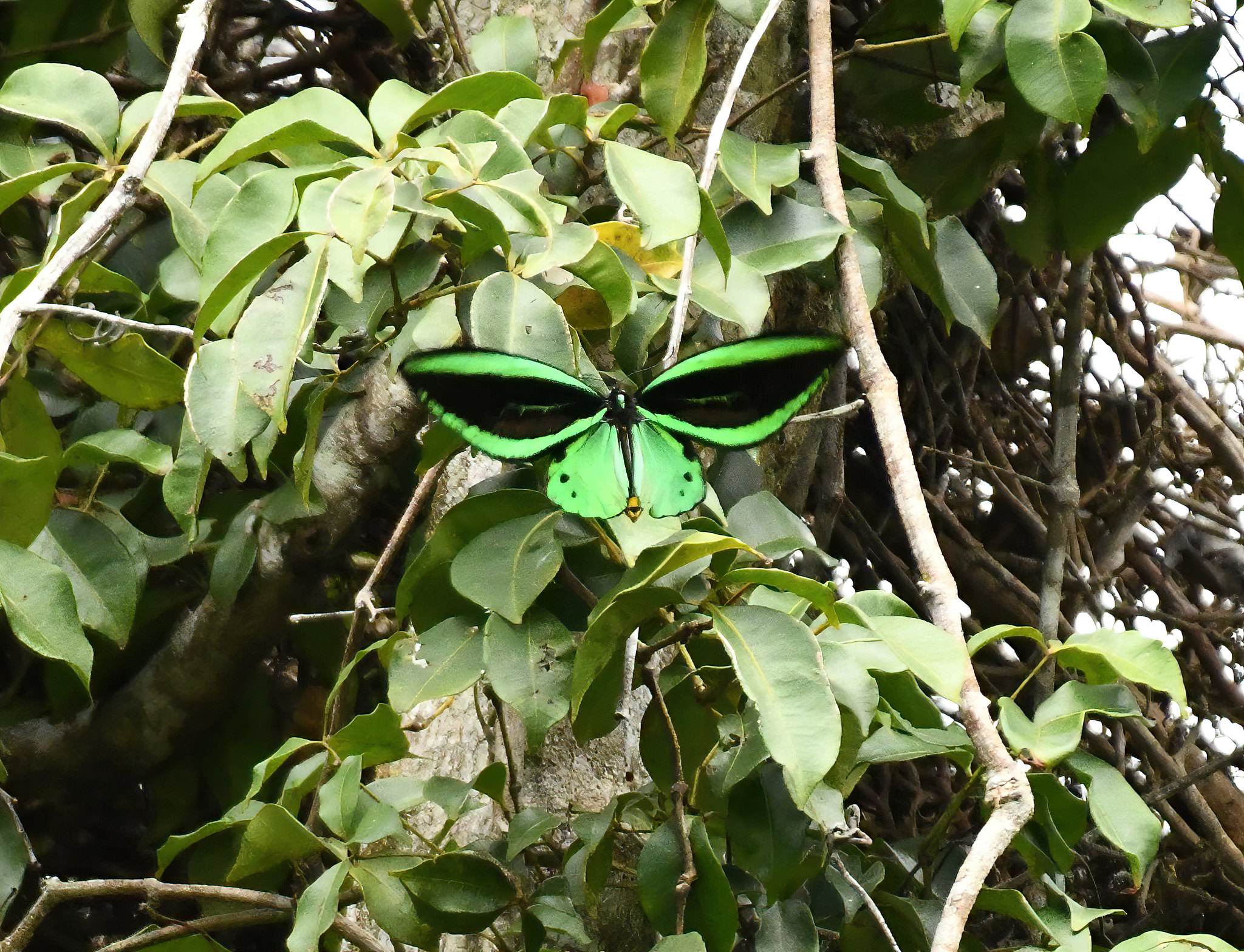
The article explores the fragile existence of birdwing butterflies (genus Ornithoptera) in eastern Indonesia, revealing how beauty, commerce, and environmental destruction intersect to threaten their survival.
Alfred Russel Wallace’s 19th-century discovery of the Golden Birdwing Butterfly (Ornithoptera croesus). Now called Wallace’s Golden Birdwing it is one of a dozen species in the genus Ornithoptera, or birdwing butterflies. They can only be found in the northern parts of Australasia, including Papua and the Malukus.,
The full article traces how these striking butterflies became prized collector’s items and scientific icons, yet now face mounting pressures from illegal trade, deforestation, mining, and climate change.
At the centre of the narrative is Ongen, a butterfly breeder and trader in the Maluku Islands, who runs a captive breeding facility for Ornithoptera priamus, the Common Green Birdwing butterfly. Though the species is protected under Indonesian law and regulated internationally through CITES, demand from collectors in Europe, Japan, China, and elsewhere remains high. Ongen’s facility combines captive breeding with wild capture, reflecting a blurred line between legal and illegal practices. Despite regulations intended to protect butterflies, complex licensing systems, small quotas, and high operational costs push many traders toward the black market, often facilitated through online platforms like Facebook, eBay, and Etsy.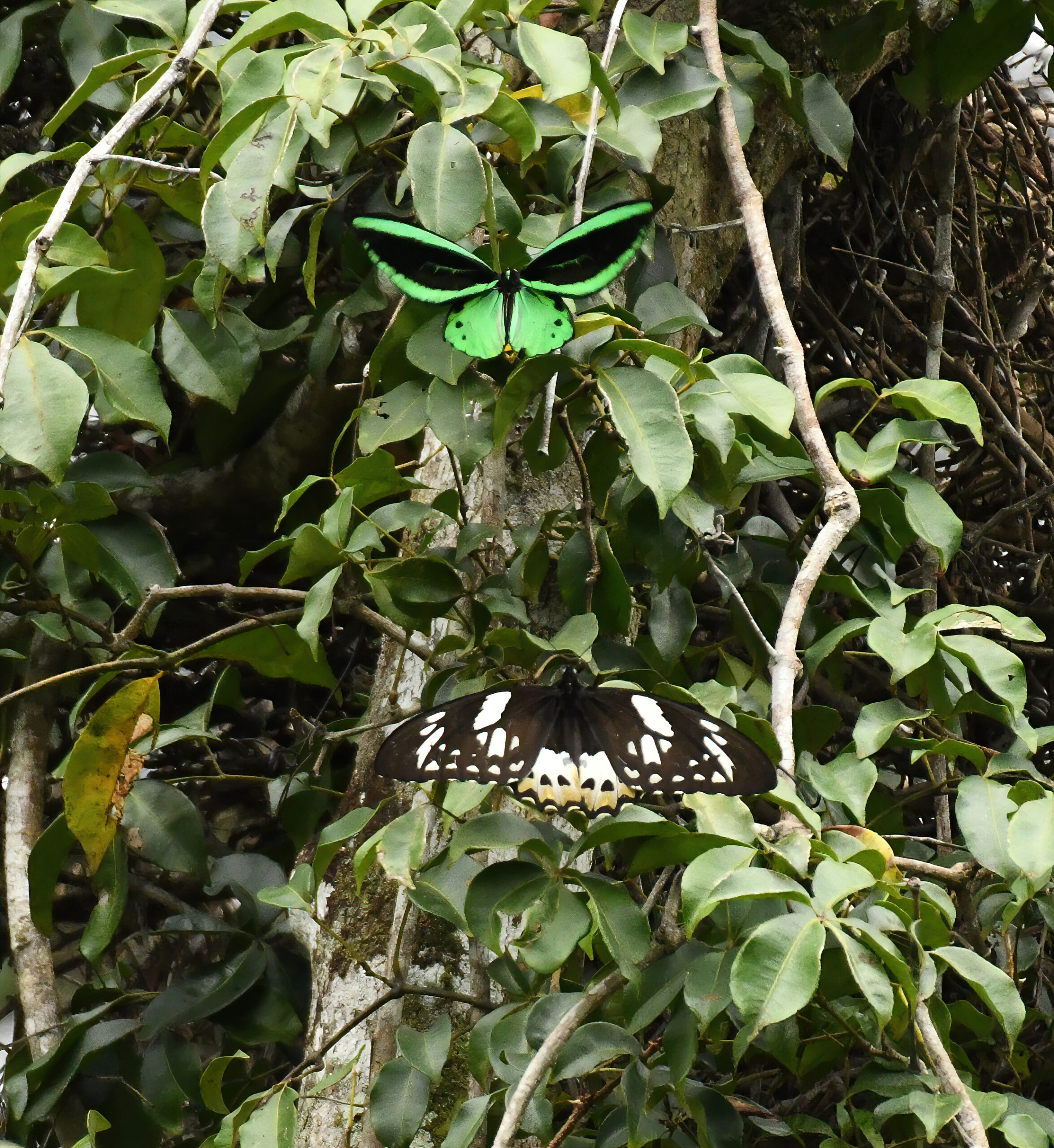
Female butterflies are captured for broodstock, caterpillars are fed exclusively on Aristolochia leaves, and newly emerged adults are often euthanized quickly to preserve their pristine wings for sale. While captive breeding produces some income and may relieve pressure on wild populations, it is insufficient to meet demand. Ongen argues that as long as forests remain intact, butterfly populations can recover—but this assumption is increasingly undermined by rampant habitat destruction.
Deforestation emerges as the most severe threat. Mining operations, sand quarries, oil palm plantations, and large-scale agricultural projects are rapidly clearing forests in Maluku and Papua, the global stronghold of birdwing butterfly diversity. Scientists such as Djunijanti Peggie of Indonesia’s National Research and Innovation Agency emphasize that butterflies depend on specific host plants and forest conditions; once these are lost, reproduction becomes impossible. Several Ornithoptera species are now red-listed by the IUCN, with some endemic species already classified as vulnerable.
The story also follows Daawia, a biologist in Papua who has turned her home garden into a birdwing butterfly conservation site. Once teeming with butterflies, her garden has seen a troubling decline in Ornithoptera priamus sightings, underscoring how even small-scale sanctuaries are affected by broader environmental change. Daawia highlights the lack of baseline data on insects in Indonesia, warning that many species may vanish before they are even studied.
In closing, the article argues that the true “butterfly effect” is no metaphor: the loss of insects reflects a profound imbalance between human development and nature, where fragile wings bear the weight of global environmental neglect.


