SBBT

Saving swallowtail and birdwing butterflies

Donate

  • Bluesky
  • E-mail
  • Facebook
  • Instagram
  • Twitter
  • YouTube
  • Home
  • Latest News & Blogs
    • News
    • Blog
  • About Us
    • In Brief
    • People
      • Patron, President & Board Of Trustees
      • Honorary Advisors & Coordinators
    • Frequently Asked Questions
    • Opportunities
      • Position vacant: Hon. Secretary
      • Position Vacant: Trustee
    • Small Print
      • Constitution of the Swallowtail and Birdwing Butterfly Trust
      • Charity Registration
      • Privacy Policy
      • Annual Reports & Financials
  • Our Projects
    • Conservation
      • Conservation of the Swallowtail in Britain
        • Wheatfen Meeting Agenda and Speakers 27 June 2018
        • Meeting Report: Conservation of the Swallowtail in Britain
        • Swallowtail MSC Studentships
        • Report in the Guardian
      • Queen Alexandra’s Birdwing Project
      • The Bhutan Glories and Shoskom – the Bhutan Glories’ Hill
      • Swallowtail Survey on Fiji Identifies New Species
        • SBBT’s Further Studies on the Natewa Swallowtail
      • Swallowtail Survey on Dominica
      • Homerus Swallowtail DNA Study
      • Kinabalu or Borneo Birdwing
        • Kinabalu Birdwing Project Update 2023
        • Kinabalu Birdwing Project
      • Richmond Birdwing
    • Research Needs
    • On-line Conferences
      • “Saving Swallowtails: the Apollos and their Allies” 2024
      • “Saving Swallowtails” 2021
        • “SAVING SWALLOWTAILS” CONFERENCE WORLD SWALLOWTAIL DAY 2021 REPORT
    • World Swallowtail Day
      • 2024 World Swallowtail Day – 9th June
      • 2023 World Swallowtail Day – 11th June
      • Saving Swallowtails – 12 June 2021
      • 2020 World Swallowtail Day – 14th June
        • SBBT Photography Competition Winners
        • Swallowtail Limerick Day
        • Colouring Book
      • 2019 World Swallowtail Day – REPORT
  • About Swallowtails
    • Swallowtails of the World
      • Papilionidae – Global List (Test)
      • Swallowtails of the World – Take the Tour
      • Subfamily Baroniinae
      • Subfamily Papilioninae
      • Subfamily Parnassiinae
      • References
      • Featured Species
        • Macleay’s Swallowtail
        • Richmond Birdwing
        • Small Réunion Swallowtail: Papilio phorbanta
    • Biology
    • Distribution & Classification
    • Swallowtails & Humankind
    • Swallowtails & Science
    • Threats To Swallowtails
      • Top Ten Threatened Species
        • Graphium levassori
        • Graphium sandawanum
        • Ceylon Rose: Atrophaneura jophon
        • Southern Tailed Birdwing: Ornithoptera meridionalis
        • Queen Alexandra’s Birdwing
        • Wallace’s Golden Birdwing: Ornithoptera croesus
        • Homer’s or Homerus Swallowtail: Papilio homerus
        • Papilio moerneri
        • Papilio aristophontes
        • Luzon Peacock Swallowtail: Papilio chikae
    • Captive Breeding & Release Of Butterflies
    • Key References
  • Publications
    • Papilio! Newsletters
    • Global Priorities
    • Action Plan
  • Artwork
  • Merchandise
  • Contact Us
  • World Swallowtail Day – 8th June 2025
SBBT » Latest News and Blog » Blog » On thin ice: Cryopreservation attempts to conserve the British Swallowtail

On thin ice: Cryopreservation attempts to conserve the British Swallowtail

15th February 2026 by SBBT

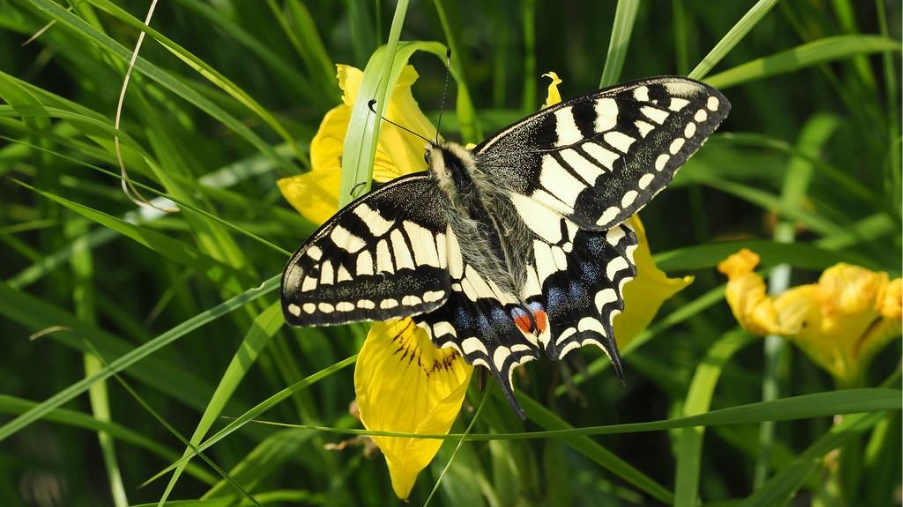
Britain is home to only one native species of Swallowtail – the iconic subspecies the British Swallowtail Papilio machaon britannicus. It is Britain’s largest butterfly and a symbol for its home region, the Norfolk Broads. Unfortunately, this has not protected the species from population decline and habitat restriction. Due to changes in habitat management and significant drying of vast areas of land to support agriculture, the wet, fenland habitat that the Swallowtail calls home has shrunk and become fragmented. Consequently, the butterfly’s range has contracted by over 55% in just 20 years. 

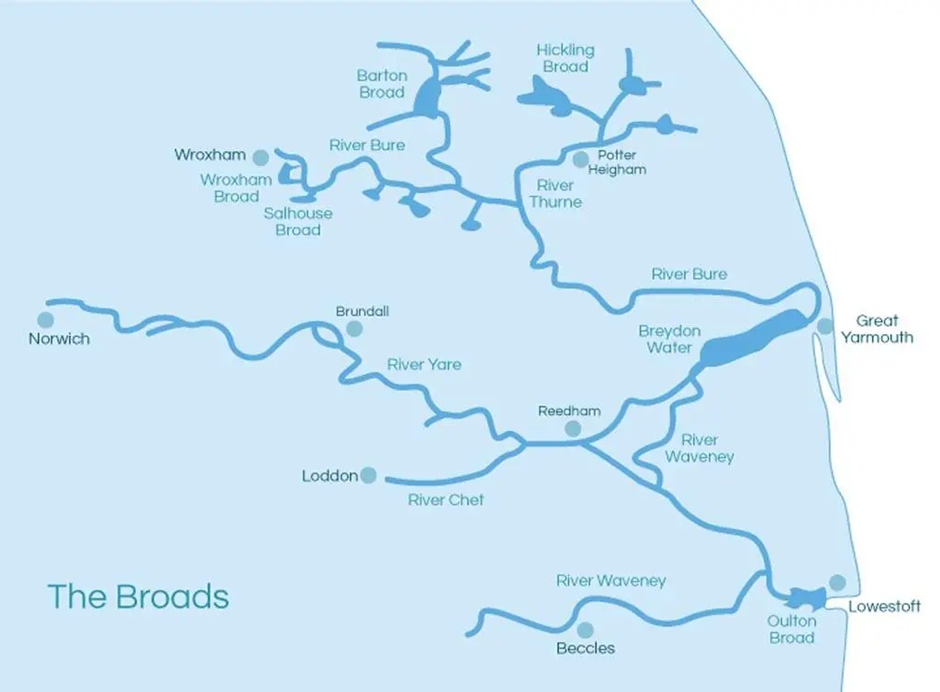
The Norfolk Broads, a manufactured network of rivers and lakes due to medieval peat digging, is Britain’s largest freshwater, wetland landscape. The resulting wetlands were created by water ingress from rising sea levels and have become a much loved, explored, and protected part of British culture. Climate change, however, is altering this special area. Where sea levels are continuing to rise and erratic weather patterns are causing seawater surges into the freshwater system on a more frequent and severe basis, the Swallowtail’s remaining stronghold is under threat. Its singular food plant, Milk Parsley Peucedanum palustre, cannot thrive in a saline environment and the combination of restricted breeding habitats and the very immediate threat to its larval food plant means the future for the British Swallowtail is precarious. 
In an attempt to conserve the species, a PhD project is underway between Anglia Ruskin University, Jimmy’s Farm, and Nature’s SAFE in the UK. The project’s aim is to develop a method of cryopreservation for the fertilised eggs of the European Swallowtail P. m. gorganus, which is genetically similar to, but far more abundant than, the British Swallowtail. This will help us to safeguard against the rapid decline of the British Swallowtail’s current habitat and enable sufficient time to assess and trial other regions that may form a suitable new home within the UK.

The project is an exciting prospect and development in the world of insect conservation. There are currently no workable cryopreservation methods to conserve Lepidoptera in this way, despite years of use in humans and for many mammal species. It provides us with an opportunity to protect a nationally iconic species, whilst also developing innovative technologies for conservation. However, developing a cryopreservation method is not without its challenges and insect eggs can prove a tricky candidate.

To successfully develop a method, several stages need to be achieved successively:

  • Understand the egg’s full developmental cycle and timing,
  • Remove the eggs external protective layer (the chorion),
  • Load highly concentrated cryoprotective agents into the egg to dehydrate it,
  • Vitrification via rapid cooling at extremely low temperatures (-196°C) with liquid nitrogen,
  • The egg can then be stored in a frozen state until it is needed and can be rewarmed.
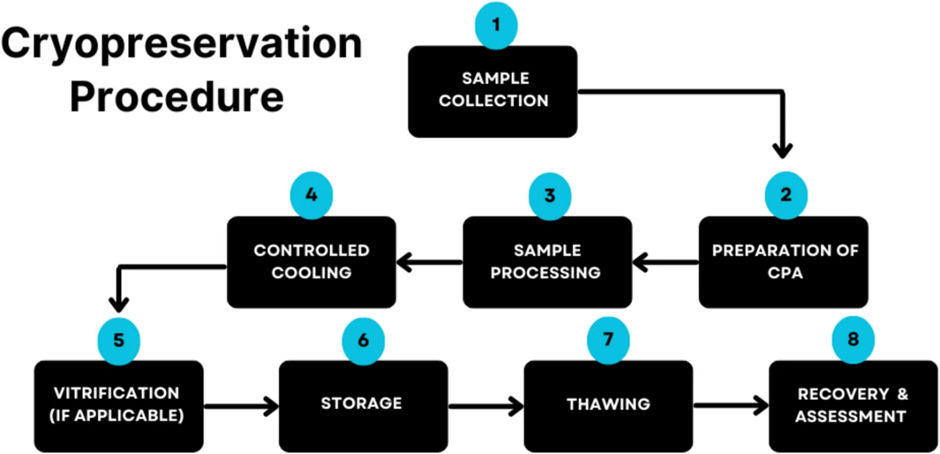
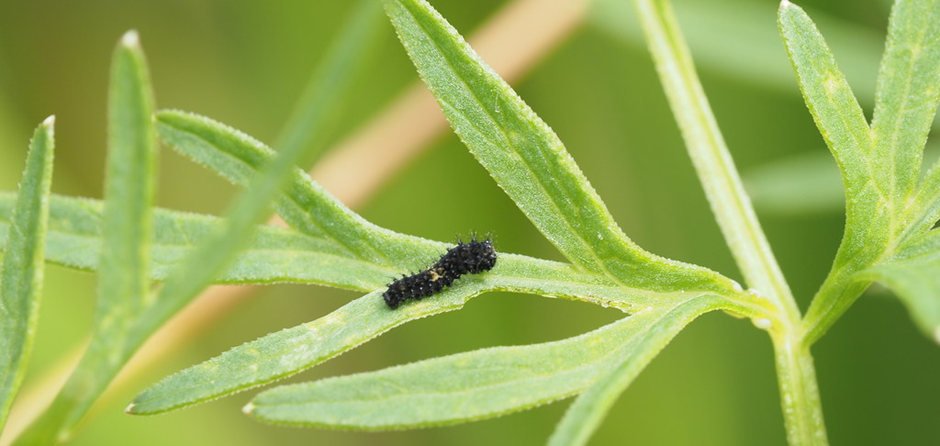
Rewarming can involve a wide range of techniques; from water baths to newer technologies such as nanoparticle-assisted heating and laser warming. We hope to trial newer technologies for rewarming as the more historic methods are not as likely to be successful for something as large and complex as the Swallowtail egg. Once the egg is successfully rewarmed, the egg should continue to develop as normal and hatch into a viable caterpillar. Their development will be compared to a non-frozen control group.
In a perfect world, at the end of the project we will have a reproducible cryopreservation technique with a high survivability rate. The technique can then be tested on the British Swallowtail to support its conservation strategy. But its development does not need to stop there. There is the potential to use the method across a range of Lepidoptera worldwide both for conservation and research purposes. Either way, it will be a busy three-years, with many questions, hopefully, both raised and answered along the way. Keep an eye out for future updates in Papilio! or via my LinkedIn.

Cassandra Barrett
PhD candidate at Anglia Ruskin University

Filed Under: Blog Tagged With: british swallowtail, butterflies, cryopreservation, Swallowtail

Newsletter


    We want to keep you up to date!
    Sign up to hear from us and we’ll send you our free e-newsletter and keep you up to date with what’s happening at the Swallowtail & Birdwing Butterfly Trust, including news, campaigns and appeals. Don't worry, we take care of your data and never release it to third parties. See our Privacy Policy for details

    Latest News

    On thin ice: Cryopreservation attempts to conserve the British Swallowtail

    15th February 2026

    The Quest for Queen Alexandra’s Birdwing

    15th February 2026

    Jamaican Swallowtails under threat

    4th February 2026

    The Butterfly Effect – When Butterflies Go Extinct

    21st January 2026

    Apollo Butterflies of Nepal

    12th December 2025

    Useful Links

    • Contact Us
    • Donate
    • Latest News and Blog

    Supporters & Collaborators

    Our Mission

    The mission of the Swallowtail and Birdwing Butterfly Trust is to conserve and protect members of the Papilionidae, a worldwide family of more than 580 species that include the largest, most spectacular and most endangered butterflies on the planet.
     

    Aims

    SBBT aims to build the capacity of local people and organisations to achieve long-lasting conservation and sustainable change.

    Methods

    We achieve this in four ways: we raise financial resources; convene research networks and partnerships; catalyse action, and provide scientific and technical support to conservation projects.

    Wider Reach

    Our work is generally planned and executed in the context of wider butterfly faunas, their foodplants, and the ecosystems that they inhabit.

    Giving

    Financial contributions are welcome and will be treasured. We also need your ideas, new information, suggestions and encouragement!

    Donate Today

    What We Do

    We do four things to help swallowtails and birdwings: we raise financial resources; convene networks and partnerships; catalyse action, and provide scientific and technical support.

    Contact Us

    Send an email to info@sbbt.org.uk, or post a letter to SBBT, c/o Stephenson Smart, Queens Head House, The Street, Acle, Norwich NR13 3DY, UK

    Connect

    • Bluesky
    • E-mail
    • Facebook
    • Instagram
    • Twitter
    • YouTube

    Useful Links

    • Home
    • About Swallowtails
    • About us
    • Our projects
    • Publications
    • Donate
    • Contact us

    Papilio! Newsletter


      We want to keep you up to date!
      Sign up to hear from us and we’ll send you our free e-newsletter and keep you up to date with what’s happening at the Swallowtail & Birdwing Butterfly Trust, including news, campaigns and appeals. Don't worry, we take care of your data and never release it to third parties. See our Privacy Policy for details

      © Copyright SBBT 2026 All Rights Reserved · Registered Charity 1174142