SBBT

Saving swallowtail and birdwing butterflies

Donate

  • Bluesky
  • E-mail
  • Facebook
  • Instagram
  • Twitter
  • YouTube
  • Home
  • Latest News & Blogs
    • News
    • Blog
  • About Us
    • In Brief
    • People
      • Patron, President & Board Of Trustees
      • Honorary Advisors & Coordinators
    • Frequently Asked Questions
    • Opportunities
      • Position vacant: Hon. Secretary
      • Position Vacant: Trustee
    • Small Print
      • Constitution of the Swallowtail and Birdwing Butterfly Trust
      • Charity Registration
      • Privacy Policy
      • Annual Reports & Financials
  • Our Projects
    • Conservation
      • Conservation of the Swallowtail in Britain
        • Wheatfen Meeting Agenda and Speakers 27 June 2018
        • Meeting Report: Conservation of the Swallowtail in Britain
        • Swallowtail MSC Studentships
        • Report in the Guardian
      • Queen Alexandra’s Birdwing Project
      • The Bhutan Glories and Shoskom – the Bhutan Glories’ Hill
      • Swallowtail Survey on Fiji Identifies New Species
        • SBBT’s Further Studies on the Natewa Swallowtail
      • Swallowtail Survey on Dominica
      • Homerus Swallowtail DNA Study
      • Kinabalu or Borneo Birdwing
        • Kinabalu Birdwing Project Update 2023
        • Kinabalu Birdwing Project
      • Richmond Birdwing
    • Research Needs
    • On-line Conferences
      • “Saving Swallowtails: the Apollos and their Allies” 2024
      • “Saving Swallowtails” 2021
        • “SAVING SWALLOWTAILS” CONFERENCE WORLD SWALLOWTAIL DAY 2021 REPORT
    • World Swallowtail Day
      • 2024 World Swallowtail Day – 9th June
      • 2023 World Swallowtail Day – 11th June
      • Saving Swallowtails – 12 June 2021
      • 2020 World Swallowtail Day – 14th June
        • SBBT Photography Competition Winners
        • Swallowtail Limerick Day
        • Colouring Book
      • 2019 World Swallowtail Day – REPORT
  • About Swallowtails
    • Swallowtails of the World
      • Papilionidae – Global List (Test)
      • Swallowtails of the World – Take the Tour
      • Subfamily Baroniinae
      • Subfamily Papilioninae
      • Subfamily Parnassiinae
      • References
      • Featured Species
        • Macleay’s Swallowtail
        • Richmond Birdwing
        • Small Réunion Swallowtail: Papilio phorbanta
    • Biology
    • Distribution & Classification
    • Swallowtails & Humankind
    • Swallowtails & Science
    • Threats To Swallowtails
      • Top Ten Threatened Species
        • Graphium levassori
        • Graphium sandawanum
        • Ceylon Rose: Atrophaneura jophon
        • Southern Tailed Birdwing: Ornithoptera meridionalis
        • Queen Alexandra’s Birdwing
        • Wallace’s Golden Birdwing: Ornithoptera croesus
        • Homer’s or Homerus Swallowtail: Papilio homerus
        • Papilio moerneri
        • Papilio aristophontes
        • Luzon Peacock Swallowtail: Papilio chikae
    • Captive Breeding & Release Of Butterflies
    • Key References
  • Publications
    • Papilio! Newsletters
    • Global Priorities
    • Action Plan
  • Artwork
  • Merchandise
  • Contact Us
  • World Swallowtail Day – 8th June 2025
SBBT » Latest News and Blog » Blog » The Butterfly Effect – When Butterflies Go Extinct

The Butterfly Effect – When Butterflies Go Extinct

21st January 2026 by Martin Partridge

The article explores the fragile existence of birdwing butterflies (genus Ornithoptera) in eastern Indonesia, revealing how beauty, commerce, and environmental destruction intersect to threaten their survival.

Alfred Russel Wallace’s 19th-century discovery of the Golden Birdwing Butterfly (Ornithoptera croesus). Now called Wallace’s Golden Birdwing it is one of a dozen species in the genus Ornithoptera, or birdwing butterflies. They can only be found in the northern parts of Australasia, including Papua and the Malukus.,

The full article traces how these striking butterflies became prized collector’s items and scientific icons, yet now face mounting pressures from illegal trade, deforestation, mining, and climate change.

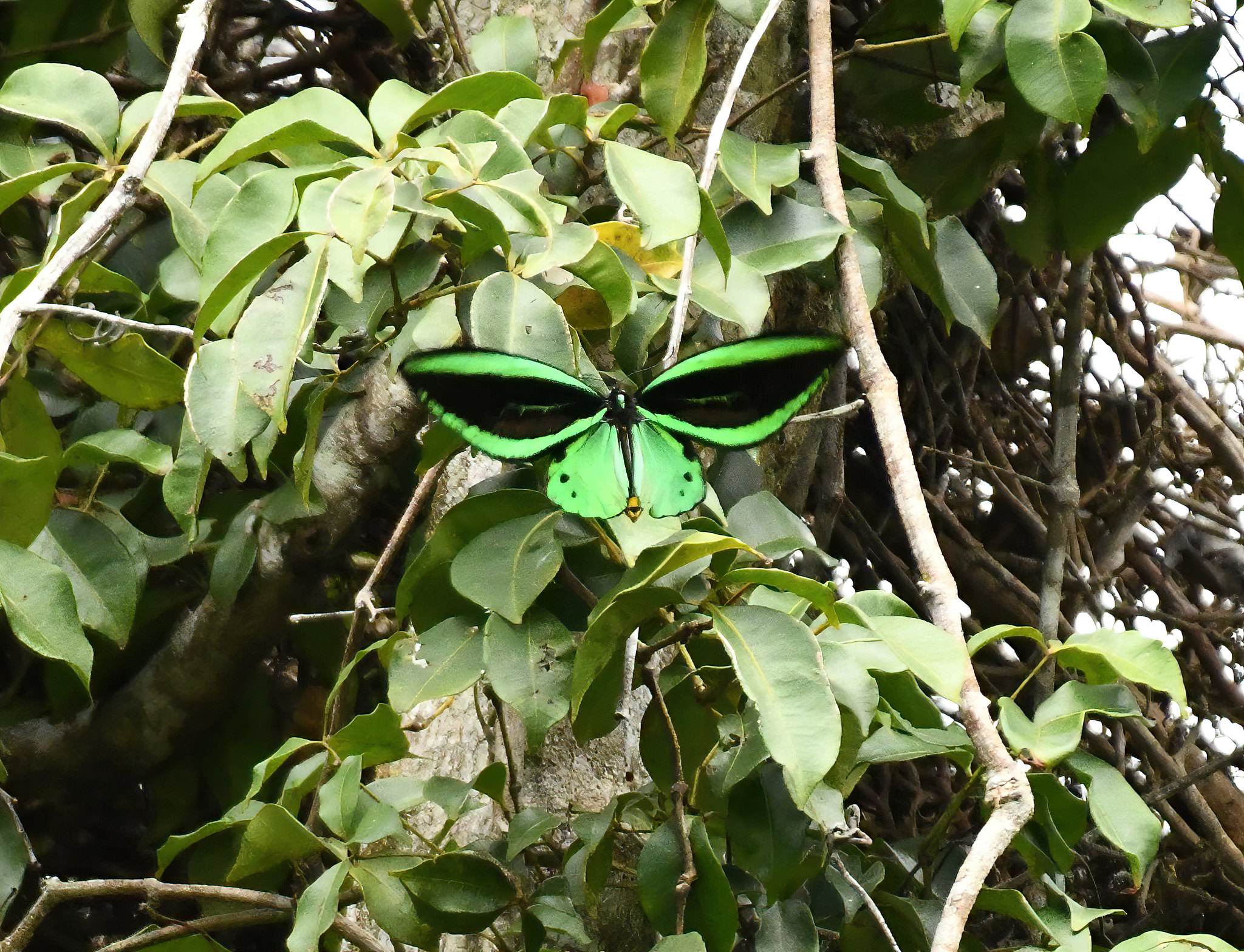
At the centre of the narrative is Ongen, a butterfly breeder and trader in the Maluku Islands, who runs a captive breeding facility for Ornithoptera priamus, the Common Green Birdwing butterfly. Though the species is protected under Indonesian law and regulated internationally through CITES, demand from collectors in Europe, Japan, China, and elsewhere remains high. Ongen’s facility combines captive breeding with wild capture, reflecting a blurred line between legal and illegal practices. Despite regulations intended to protect butterflies, complex licensing systems, small quotas, and high operational costs push many traders toward the black market, often facilitated through online platforms like Facebook, eBay, and Etsy.
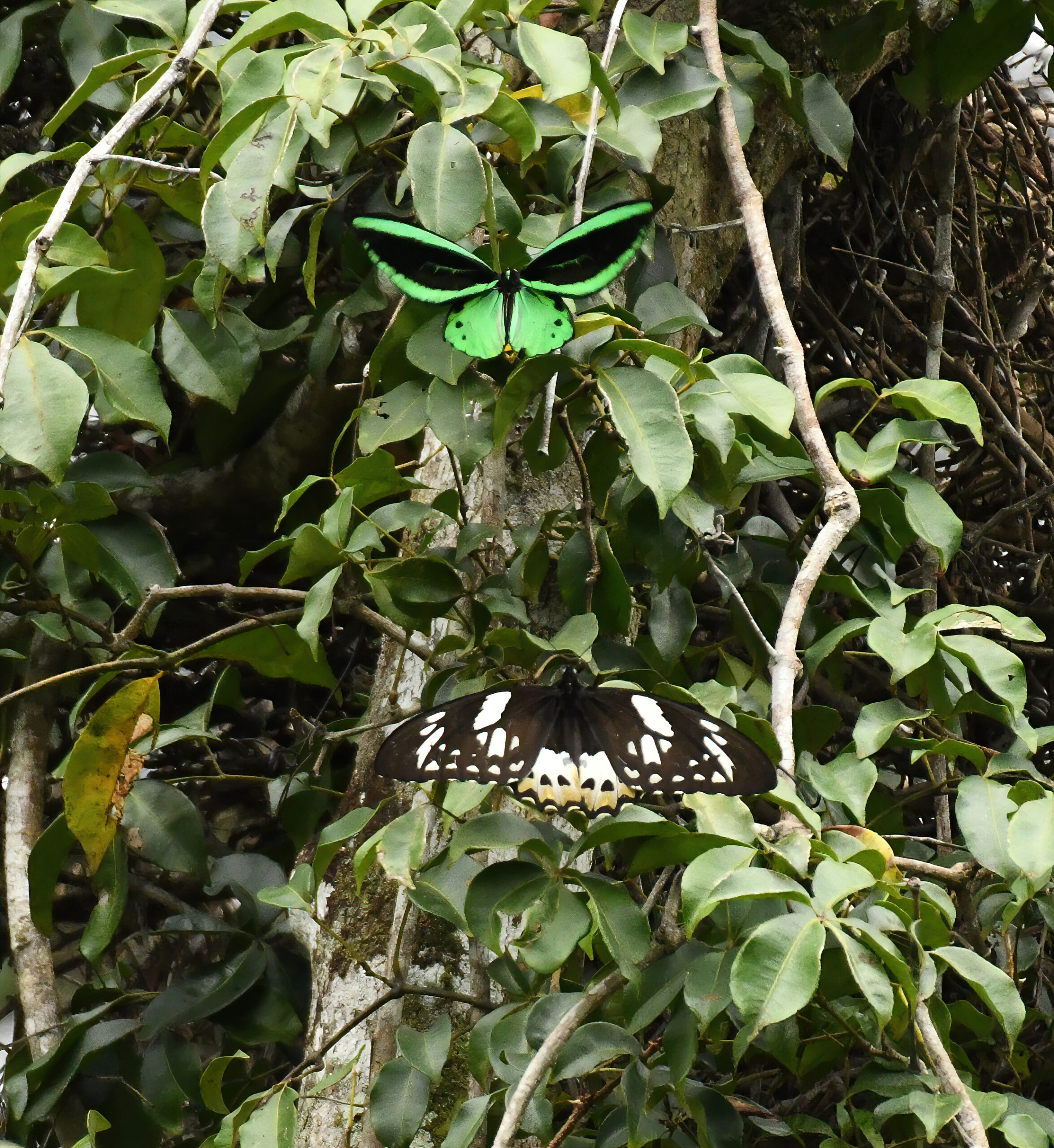
Female butterflies are captured for broodstock, caterpillars are fed exclusively on Aristolochia leaves, and newly emerged adults are often euthanized quickly to preserve their pristine wings for sale. While captive breeding produces some income and may relieve pressure on wild populations, it is insufficient to meet demand. Ongen argues that as long as forests remain intact, butterfly populations can recover—but this assumption is increasingly undermined by rampant habitat destruction.

Deforestation emerges as the most severe threat. Mining operations, sand quarries, oil palm plantations, and large-scale agricultural projects are rapidly clearing forests in Maluku and Papua, the global stronghold of birdwing butterfly diversity. Scientists such as Djunijanti Peggie of Indonesia’s National Research and Innovation Agency emphasize that butterflies depend on specific host plants and forest conditions; once these are lost, reproduction becomes impossible. Several Ornithoptera species are now red-listed by the IUCN, with some endemic species already classified as vulnerable.

The story also follows Daawia, a biologist in Papua who has turned her home garden into a birdwing butterfly conservation site. Once teeming with butterflies, her garden has seen a troubling decline in Ornithoptera priamus sightings, underscoring how even small-scale sanctuaries are affected by broader environmental change. Daawia highlights the lack of baseline data on insects in Indonesia, warning that many species may vanish before they are even studied.

In closing, the article argues that the true “butterfly effect” is no metaphor: the loss of insects reflects a profound imbalance between human development and nature, where fragile wings bear the weight of global environmental neglect.

Filed Under: Blog

Newsletter


    We want to keep you up to date!
    Sign up to hear from us and we’ll send you our free e-newsletter and keep you up to date with what’s happening at the Swallowtail & Birdwing Butterfly Trust, including news, campaigns and appeals. Don't worry, we take care of your data and never release it to third parties. See our Privacy Policy for details

    Latest News

    The Butterfly Effect – When Butterflies Go Extinct

    21st January 2026

    Apollo Butterflies of Nepal

    12th December 2025

    Featured species : Kaiser-I-Hind

    29th August 2025

    The Bhutan Glories: An update from Sonam Dorji

    29th May 2025

    Featured species: Papilio hornimani

    27th May 2025

    Useful Links

    • Contact Us
    • Donate
    • Latest News and Blog

    Supporters & Collaborators

    Our Mission

    The mission of the Swallowtail and Birdwing Butterfly Trust is to conserve and protect members of the Papilionidae, a worldwide family of more than 580 species that include the largest, most spectacular and most endangered butterflies on the planet.
     

    Aims

    SBBT aims to build the capacity of local people and organisations to achieve long-lasting conservation and sustainable change.

    Methods

    We achieve this in four ways: we raise financial resources; convene research networks and partnerships; catalyse action, and provide scientific and technical support to conservation projects.

    Wider Reach

    Our work is generally planned and executed in the context of wider butterfly faunas, their foodplants, and the ecosystems that they inhabit.

    Giving

    Financial contributions are welcome and will be treasured. We also need your ideas, new information, suggestions and encouragement!

    Donate Today

    What We Do

    We do four things to help swallowtails and birdwings: we raise financial resources; convene networks and partnerships; catalyse action, and provide scientific and technical support.

    Contact Us

    Send an email to info@sbbt.org.uk, or post a letter to SBBT, c/o Stephenson Smart, Queens Head House, The Street, Acle, Norwich NR13 3DY, UK

    Connect

    • Bluesky
    • E-mail
    • Facebook
    • Instagram
    • Twitter
    • YouTube

    Useful Links

    • Home
    • About Swallowtails
    • About us
    • Our projects
    • Publications
    • Donate
    • Contact us

    Papilio! Newsletter


      We want to keep you up to date!
      Sign up to hear from us and we’ll send you our free e-newsletter and keep you up to date with what’s happening at the Swallowtail & Birdwing Butterfly Trust, including news, campaigns and appeals. Don't worry, we take care of your data and never release it to third parties. See our Privacy Policy for details

      © Copyright SBBT 2026 All Rights Reserved · Registered Charity 1174142